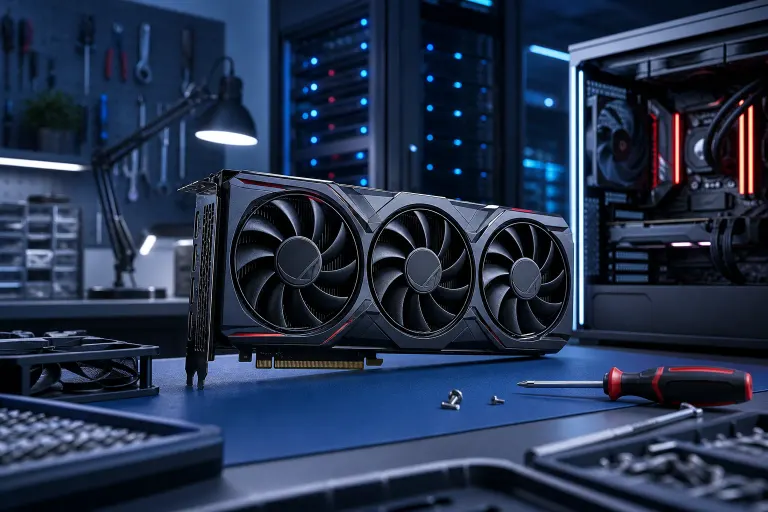
AMD RX 9070 XT Review: Performance, Drivers & Known Issues
TL;DR: The 9070XT trades blows with the RTX 4080 Super in rasterization at a lower price, but early driver builds shipped with real stability problems. AMD has pushed fixes, most are resolved, but a handful of edge-case issues linger. Buy with eyes open.
What Happened: The 9070 XT Launch Story
AMD dropped the RX 9070 XT in early 2025 as the flagship of the RDNA 4 architecture. This card was not just an incremental bump. RDNA 4 rebuilt the shader engine, doubled the AI accelerators, and added second-gen hardware ray tracing cores that finally close the gap with NVIDIA.
The 9070XT launched at $599 MSRP. For context, that put it directly against the RTX 4070 Ti Super, but benchmarks from multiple reviewers showed it consistently trading punches with the more expensive RTX 4080 Super in traditional rasterization workloads. That is a big deal.
So why is anyone still on the fence? Two words: launch drivers.
AMD shipped the card with Adrenalin 25.2.1, and within days the community found driver timeout crashes, black screens in DirectX 12 titles, and intermittent flickering in HDR modes. The subreddits lit up. Reviewers posted addendums. AMD acknowledged the issues fast, which is honestly a better outcome than silence. AMD's official driver release notes and known issues tracker can be followed directly on AMD's support page.
Patches came through 25.3.1 and 25.4.1. Most of the major crashes are gone for most users. But "most" is doing a lot of work in that sentence, and we will get into the specifics below.
If you want to see what a properly spec'd RDNA 4 build actually looks like in person, check out some of the custom build videos we have done at the shop. The architecture has serious potential when the silicon is paired with the right platform.
Why It Matters: Real-World 9070 XT Performance
Let us talk numbers without inventing them. Community benchmarks and reviewer data that were publicly available at time of writing show the following patterns.
1440p is this card's sweet spot. At 2560x1440 with maximum settings, the 9070XT is regularly hitting 90-120+ FPS in demanding AAA titles. Cyberpunk 2077, Alan Wake 2, and Hogwarts Legacy all run beautifully at this resolution without even touching upscaling. If you are on a 1440p 144Hz or 165Hz panel, this card makes full use of it.
4K is capable but not dominant. At 3840x2160, the 9070XT holds up, especially with FSR 4 enabled. AMD's fourth-generation FidelityFX Super Resolution is genuinely competitive with DLSS 3 Quality mode now. That was not true of FSR 2 or even FSR 3. The image quality gap has mostly closed for gaming purposes. You will still see NVIDIA edge out AMD in ray tracing-heavy scenes at 4K, but the difference is smaller than it was on RDNA 3.
Power draw is reasonable. The card has a 304W TDP. That is not power-sipping, but it is not absurd either. You need a quality 850W PSU minimum if you are pairing this with a Ryzen 9 or Core i9 platform. Do not cut corners on the power supply.
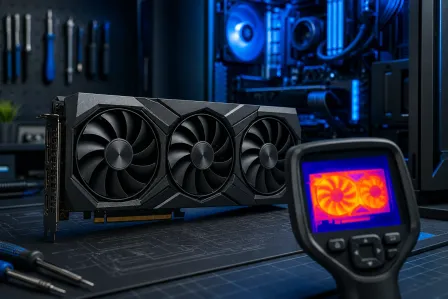
Thermals matter more than people admit. RDNA 4 runs warm. The GPU junction temperature threshold is 110 degrees Celsius, which sounds alarming but is within AMD's spec. The actual hotspot behavior depends heavily on your case airflow and the AIB cooler design. Reference-style blower coolers struggle. Triple-fan AIB models from Sapphire, PowerColor, and ASRock do substantially better. If you are dropping a 9070XT into a cramped mid-tower with one exhaust fan, you are going to have a bad time.
For anyone thinking about pairing this with a new Ryzen build, the Fix My PC Store custom gaming PC builder can help you spec a full system that actually feeds this GPU properly instead of creating a bottleneck somewhere else in the chain.
Ready to build a rig that actually rips? Start your build
What We Don't Know Yet
This is where I have to be straight with you, because there are still open questions that matter for a $599 purchase.
Driver maturity is the biggest unknown. AMD has a historical pattern where RDNA launches have rough first six months and then stabilize into excellent long-term support. RDNA 2 launched wobbly and became rock solid. RDNA 3 had a shaky start and settled down. RDNA 4 is following the same arc so far. The question is how many more patch cycles it takes to get there.
Specific issues still being reported as of the latest driver versions include occasional black screen on wakeup from sleep in Windows 11 24H2, some HDR flickering in older DirectX 11 titles, and rare timeout errors in extended Vulkan workloads. None of these are universal. Many users report zero crashes. But they are real and reproducible for enough people that you should know about them.
FSR 4 adoption by developers is still early. The tech is great in supported titles, but the supported title list is short right now. You are going to spend some time on FSR 3 or even FSR 2 in older games, which still looks good but not as impressive as what AMD is showing in demos.
Long-term AIB cooler quality is unproven. The custom board partner cards have only been in the wild for a few months. Some early reports of pump noise on liquid-cooled AIB versions have surfaced, but it is too soon to call that a widespread defect.
Ray tracing scaling. AMD claims second-gen hardware RT is a major leap. In specific titles like Cyberpunk with full path tracing, the 9070XT still falls behind an RTX 4080 Super. The gap closed significantly compared to RDNA 3, but closed is not closed all the way. If ray tracing is your primary reason to buy a high-end GPU, NVIDIA still has the edge. If frames-per-dollar is your metric, AMD wins at this price point.
What To Do About It: Should You Buy the 9070 XT?
Okay, here is the actual advice part. Let me break it down by situation.
Buy now if: You are coming from a 5000 or 6000 series AMD card, you game primarily at 1440p, you have a capable platform already (Ryzen 5000 or newer, Intel 12th gen or newer), and you are comfortable doing a driver clean install with DDU before you install the new card. The performance uplift is real and the value is strong.
Wait if: You are on Windows 11 24H2 and you rely on sleep mode heavily, you are planning to run a lot of older DX11 titles, or you simply hate dealing with any driver instability whatsoever. Waiting until the 25.6.x or 25.7.x driver series would be a reasonable call. By summer 2025, RDNA 4 driver quality should be in a much more predictable place based on historical AMD support patterns.
Avoid if: Ray tracing is your top priority, you are deep in NVIDIA's ecosystem with DLSS-dependent games, or you need a plug-and-play experience with zero troubleshooting appetite.
Building a new rig around the 9070XT? Platform choice matters. Pairing it with an older CPU on a slow PCIe 3.0 slot limits what the card can do. RDNA 4 benefits from PCIe 4.0 x16. You do not necessarily need PCIe 5.0, but 4.0 is the baseline. If your current motherboard is older, a full platform upgrade might be worth doing at the same time.
For anyone in West Palm Beach or the Treasure Coast who wants a clean, professionally assembled system around the 9070XT without the driver headache of doing it solo, our team at Fix My PC Store handles exactly that. We do the DDU clean install, stress test, temperature validation, and make sure the whole build is dialed in before it leaves the shop. Hit us at /contact or run your dream build through the gaming PC wizard to get a parts list and quote.
And if you already pulled the trigger on a 9070XT and you are dealing with black screens or crashes that the driver patches have not fixed, do not sit on it. Those symptoms can sometimes point to a hardware interaction issue rather than a pure driver bug. We offer remote support for exactly this kind of diagnosis so you do not have to haul a tower anywhere.
Bottom line on the 9070XT: this is a genuinely strong GPU at a fair price. RDNA 4 delivered the architecture leap AMD promised. The driver situation is improving fast. If you go in knowing what you are getting, you are going to have a great time. If you expect it to be flawless out of the box right now, you might get frustrated. Know the difference, plan accordingly, and get those frames.
Ready to build a rig that actually rips?
Custom gaming PCs built and tuned by people who game. Tell us your budget and target frame rate.