How to Test if Your Laptop Charger Is Causing Power Problems
TL;DR: A bad laptop charger can cause slow charging, random shutdowns, battery drain while plugged in, or a laptop that will not turn on. Start with the simple checks: inspect the cable, confirm the outlet works, verify the charger’s wattage and voltage, then test with a known-good compatible charger or a multimeter.
Do not keep using a charger that is frayed, sparking, excessively hot, swollen, or smells burned. That is not your laptop being "dramatic." It is a safety issue.
What you need
Gather a few basics before you start:
- Your laptop and its charger
- A wall outlet you know works
- A flashlight for inspecting ports and cables
- A clean, dry work surface
- The charger label or your laptop model number
- A known-good compatible charger, if you can borrow one
- A digital multimeter, optional but useful for barrel-style chargers
For USB-C laptops, a USB-C power meter can be helpful, but it is not required for most troubleshooting. USB-C is wonderfully convenient right up until three nearly identical cables decide to have completely different capabilities. Tiny oval plug, big personality.
Avoid testing on a bed, couch, wet counter, or anywhere the charger cannot shed heat. If the charger, cable, or connector has visible damage, skip the electrical tests and replace it or have it checked.
1. Identify the power symptom first
Before blaming the charger, note exactly what your laptop is doing. The symptom helps separate a power-adapter issue from a battery, charging-port, motherboard, or software issue.
Common charger-related signs include:
- The battery percentage drops even while the charger is connected.
- Charging works only when the cable sits at a certain angle.
- The charging icon appears and disappears repeatedly.
- The laptop runs normally on battery but will not charge.
- The laptop shuts down under load despite being plugged in.
- The charger becomes unusually hot or makes a buzzing sound.
- A USB-C laptop warns that the charger is too weak.
A laptop that does nothing at all can still have a charger problem, but it is not the only possibility. A dead battery, damaged DC jack or USB-C port, liquid damage, failed power circuit, or internal board fault can look very similar.
If your machine has been dropped, exposed to water, or has a loose charging port, move that detail to the top of the suspect list. A charger cannot compensate for a port that is physically pulling away from the motherboard.
2. Check the outlet, power strip, and charger connection
Start boring. Boring finds a surprising number of problems.
Plug a lamp, phone charger, or another known-working device into the same wall outlet. If it does not work, test a different outlet. If your laptop charger is connected through a power strip, surge protector, docking station, or extension cord, temporarily bypass it and plug directly into a wall outlet.
Then check every connection in the charging chain:
- Make sure the detachable AC cable is fully seated in the charging brick.
- Make sure the laptop-side connector is fully inserted.
- Check that a USB-C plug is not partially backed out by a tight case or bent cable.
- If your charger has an LED, see whether it lights normally.
- Gently move the cable near each end while watching the charging indicator.
Do not yank, twist, or aggressively wiggle the connector. You are testing for an intermittent connection, not auditioning for a cable-wrangling rodeo.
If charging cuts in and out when you move the cable near the brick, the strain-relief area, or the laptop connector, the cable may have broken wires inside. If it only cuts out when the plug moves inside the laptop port, the port may be worn or loose instead.
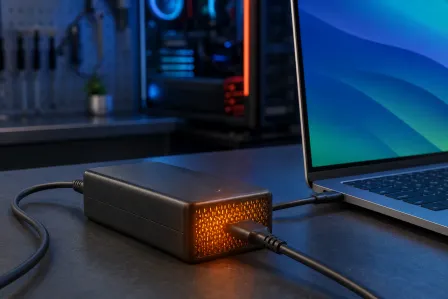
3. Inspect the charger and cable for physical damage
Unplug the charger from the wall and laptop first. Now inspect it closely under good light.
Look for:
- Fraying, cuts, cracks, flattened spots, or exposed wire
- A bent, loose, corroded, or blackened connector
- Melted plastic around the tip or USB-C end
- A split cable jacket near the brick or plug
- A charger brick that rattles, bulges, or smells burnt
- Discoloration or debris inside the laptop charging port
Pay special attention to the last few inches of cable at both ends. That is where repeated bending usually does its damage. Wrapping a charger tightly around the brick might look tidy, but it is a pretty reliable way to fatigue the cable over time.
For barrel connectors, check whether the center pin is straight and whether the outer metal sleeve is loose. For USB-C, inspect the connector for bent contacts, packed lint, or a plug that feels unusually loose. Do not poke metal objects into a USB-C port. Use a plastic pick or a soft brush only after the device is powered off.
A visibly damaged charger should be replaced. Electrical tape is not a repair plan for a power cable. It is a temporary invitation for heat, shorts, and regret.
4. Confirm the charger is the correct type and wattage
A charger can fit your laptop and still be wrong for it. This is especially common with USB-C charging, universal adapters, and chargers borrowed from another device.
Check the label on the original charger, the replacement charger, or your laptop manufacturer’s support documentation. Compare these details:
Output voltage
For traditional barrel chargers, the output voltage must match the laptop’s requirement. A charger labeled 19V should generally be replaced with another 19V unit specified for that laptop. Do not guess because the plug happens to fit.
USB-C Power Delivery handles voltage negotiation differently, so you usually do not match one fixed output number. Instead, confirm that the charger supports USB-C PD and can provide enough power for the laptop.
Wattage
The replacement should provide at least the wattage your laptop needs. A lower-wattage charger may charge very slowly, refuse to charge under load, or drain the battery while the laptop is running. A higher-wattage charger is often fine when it is compatible and from a reputable manufacturer, because the laptop draws what it needs.
For example, a small phone charger might power a sleeping USB-C laptop very slowly, but it may not keep up once you open a dozen browser tabs, start a video call, or connect a dock. Phones and laptops share a connector now. They did not suddenly become the same creature.
Connector and protocol
For barrel chargers, the plug size and center-pin design must match. For USB-C, the charger, cable, laptop, and any dock all need compatible power-delivery support. Some USB-C cables carry data but cannot reliably carry the required charging power.
If you are not sure which charger your model needs, check the laptop manufacturer’s official documentation or bring both the laptop and charger to a laptop repair technician. Matching a random adapter by plug shape is how avoidable power problems begin.
5. Test with a known-good compatible charger
This is one of the most useful tests because it changes only one variable.
Borrow or use another charger that is confirmed compatible with your exact laptop or has the correct voltage, connector, and adequate wattage. Connect it directly to a known-working wall outlet, then watch the laptop for 10 to 15 minutes.
Here is what the results usually mean:
- The laptop charges normally with the second charger: Your original charger or cable is likely faulty.
- The laptop still will not charge with the second charger: The problem may be the battery, charging port, USB-C circuitry, or internal power system.
- Both chargers work only at a certain angle: The laptop port is more likely at fault.
- The second charger works until the laptop is busy: It may not provide enough wattage, or the battery and internal power circuitry need attention.
For MacBooks, use a compatible USB-C PD charger with sufficient power. For older MagSafe models, use the correct MagSafe generation and wattage. If your Mac reports that it is not charging, checking macOS battery status can help, but a message alone does not prove the charger is bad. A worn battery or system condition can produce similar warnings. If you need hands-on help, Mac repair service can verify the adapter, battery, and charging hardware together.
Cracked screen or a phone that won't hold a charge? Get a repair quote
6. Watch charging behavior in Windows or macOS
With the charger connected, turn on the laptop and observe the battery status. You are looking for consistency, not just the presence of a lightning-bolt icon.
In Windows, click the battery icon in the taskbar. The wording varies by version and manufacturer, but you may see charging, plugged in, not charging, or a low-power warning. Let the laptop sit for several minutes, then note whether the battery percentage rises, holds steady, or falls.
In macOS, click the battery menu in the menu bar and look for charging status or any service recommendation. You can also open System Settings and review Battery information. A battery marked for service may still charge, but it deserves attention.
Next, put the laptop under a normal workload. Open a browser, a video, and the apps you typically use. If the battery drains while plugged in, do not assume the charger is automatically defective. It might be undersized, the cable may not support the needed power, the laptop may be drawing more power than the adapter can provide, or the battery could be failing.
If your work laptop keeps losing power during the day, do not wait for the next deadline to make it worse. A business device can also have docking, power-management, and fleet-standardization issues. Managed IT support can help businesses identify recurring hardware and charging problems before they become a desk full of dead laptops.
7. Use a multimeter for a barrel-style charger, if you know how
A multimeter can confirm whether a traditional barrel-style charger is producing approximately the voltage printed on its label. This test is not suitable for every charger, and it is usually not the best first test for USB-C adapters.
First, read the charger label. Find the Output line, such as 19V DC, and check its polarity symbol. Also inspect the connector design: some laptop connectors include a separate center identification pin that is not the power contact. If you cannot clearly identify the actual inner barrel contact and polarity for your model, use model-specific guidance or have the adapter professionally tested. Set your multimeter to DC voltage, using a range above the labeled output if your meter does not auto-range.
With the charger plugged into the wall but not connected to the laptop:
- Place the probes on the outer barrel and the actual inner barrel power contact, following the polarity symbol on the adapter label. Do not probe a separate identification pin.
- Keep the probes from touching each other.
- Read the voltage on the meter.
A reading reasonably close to the stated output suggests the charger can produce voltage with no load. If the reading is negative, the probes may simply be reversed; swap them and confirm the polarity before treating it as a fault. A reading of zero, a wildly unstable reading, or a reading far from the label points toward a failed adapter or cable.
But here is the catch. A charger can pass a no-load multimeter test and still fail when the laptop demands power. Internal components can break down under load, and damaged cables can be intermittent. That is why the known-good charger test is often more conclusive.
Stop if you are uncomfortable using a multimeter. Do not open a laptop power brick. Capacitors inside can retain dangerous electrical energy even after unplugging. That is a job for qualified electronics professionals, not a kitchen-table experiment.
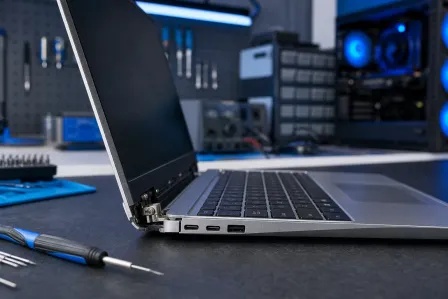
8. Rule out the battery and charging port
If the charger looks good, delivers appropriate power, and another compatible charger does not fix the issue, turn your attention to the laptop.
A failing battery can cause poor runtime, abrupt percentage changes, heat, swelling, or a laptop that shuts down unexpectedly. If you notice a lifted trackpad, separated case seams, or a bulging bottom cover, stop using the laptop and unplug it. A swollen lithium-ion battery needs prompt professional handling.
A damaged charging port can cause:
- A loose plug that will not stay seated
- Charging only at one angle
- Visible wear, scorch marks, or debris
- Repeated connect-disconnect sounds
- Failure with multiple compatible chargers
USB-C ports are particularly vulnerable to lint and side-loading from cables. Barrel jacks can loosen internally after years of use. Neither issue is fixed by pushing harder. That usually makes the repair more interesting, and not in the fun way.
At this point, professional diagnosis is sensible. Fix My PC Store’s computer repair team can test the adapter, battery health, port condition, and internal charging circuit instead of replacing parts based on a hunch.
9. Know when to stop testing and get help
Stop using the charger and seek repair help if you see sparks, smell burning, feel excessive heat, find melted plastic, or notice battery swelling. Also stop if the laptop shuts down repeatedly, shows liquid damage, or has a charging port that moves inside the case.
For a laptop that is still working but has intermittent charging, back up important files now. Power issues have a rude habit of becoming complete no-power issues at the least convenient moment. If you need assistance without leaving your office or home right away, remote support may help with software-side battery and power-setting checks, though physical charger and port faults require hands-on inspection.
Common mistakes
- Buying the cheapest lookalike charger. The right plug does not guarantee correct voltage, wattage, build quality, or USB-C PD support.
- Assuming a charging icon means everything is fine. Watch whether the battery percentage actually increases during normal use.
- Testing through a dock or power strip first. Bypass extra hardware so you can isolate the charger and wall outlet.
- Using a phone USB-C charger as proof the laptop is fine. It may be too low-power to charge the laptop properly.
- Ignoring a loose port. If multiple chargers cut out when the connector moves, the port is a strong suspect.
- Opening the power brick. External checks are reasonable. Opening a mains-powered adapter is not a safe DIY test.
- Continuing to use a hot, frayed, or burnt-smelling charger. Replace it. Do not tape it up and hope for the best.
Bottom line
The best way to test a suspected laptop charger is to work from simple to specific: verify the outlet, inspect the cable and connector, confirm compatibility, then try a known-good charger. A multimeter can support the diagnosis for barrel-style adapters, but it cannot always reveal a charger that fails under real load.
If a second compatible charger does not solve the problem, the laptop battery, charging port, or internal power circuit is likely involved. Bring the laptop and every charger you have to schedule a repair so the full power path can be tested properly. Better that than buying three mystery chargers and discovering the port was loose all along.
Cracked screen or a phone that won't hold a charge?
Bring it in. Most phone and tablet repairs are same-day, with parts that actually last.