Laptop Hinge Damage: Screen Repair vs Replacement
TL;DR: Yes, laptop hinge damage can often be repaired without replacing the screen. If the display panel still works and the lid mounting points are intact, a technician may be able to replace or secure the hinge and repair the surrounding structure.
The catch is that hinges rarely fail in a neat, polite way. A stiff hinge can rip out lid mounts, crack the display bezel, damage cables, or stress the screen panel. The right repair depends on what moved, what cracked, and whether the display itself survived the drama.
At a glance
| Option | Best when | What gets repaired or replaced | Main tradeoff |
|---|---|---|---|
| Hinge-only repair | Hinge is bent, loose, or seized, but mounting points and screen work properly | One or both hinges, sometimes screws or brackets | Only viable when surrounding plastic or metal is still solid |
| Hinge plus lid or base repair | Hinge pulled loose from the lid or lower case, but display panel works | Hinges plus lid cover, palm rest, bottom case, or mounting hardware | More labor and parts, but preserves a working screen |
| Cable or webcam-area repair | Screen flickers, cuts out, or webcam fails when lid moves | Display cable, antenna leads, webcam cable, hinge hardware | Damage may be hidden until the unit is opened |
| Screen panel replacement | Panel is cracked, has lines, black blotches, or persistent display failure | LCD or OLED panel, often with hinge repair | A good panel should not be replaced just because a hinge broke |
| Full display assembly replacement | Lid structure, hinges, bezel, cables, and panel are all damaged | Complete top display assembly | Usually the cleanest route for severe damage, but can cost more |
| Laptop replacement | Repair is disproportionate to the laptop's age, condition, or value | New or refurbished laptop, data transfer | Not every wounded laptop deserves a hero's comeback story |
Option 1: Repair the hinge without replacing the screen
This is the outcome everyone wants, and it is absolutely possible in many cases.
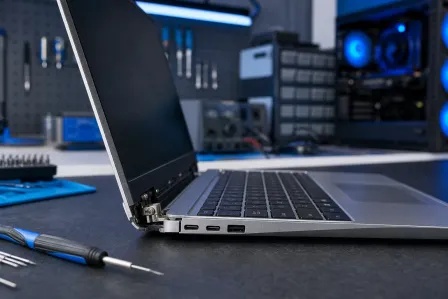
Laptop hinges are mechanical parts. They connect the display lid to the lower chassis and create enough resistance to hold the screen at a usable angle. When they loosen, bind, bend, or break, the screen panel itself may remain perfectly fine.
A hinge-only repair is most realistic when all of the following are true:
- The display turns on normally.
- There are no vertical lines, flickering, black areas, or image distortion.
- The glass or screen surface is not cracked.
- The lid opens and closes without separating at the edges.
- Hinge screws still have solid material to anchor into.
- The display cable does not cut in and out as the lid moves.
In that scenario, a technician can usually open the laptop, inspect both hinges, replace the failed hinge if a compatible part is available, and reassemble the unit. It may also make sense to replace both hinges together, even if only one seems bad. Hinges work as a pair. If one is seized or overly tight, its partner has probably been putting in unpaid overtime.
The important word is inspect. What looks like a loose hinge from the outside may actually be a broken mounting point inside the lid or base. The hinge itself can be fine while the plastic bosses holding it have snapped away.
For a proper assessment, use a shop that routinely handles laptop repair, not just general software cleanup. Hinge work requires careful disassembly around fragile display cables, Wi-Fi antenna leads, and the panel itself.
When hinge-only repair is a good value
It tends to be a sensible repair when the laptop is otherwise dependable, the battery and keyboard are in reasonable shape, and the unit still meets your needs. A hinge repair can extend the useful life of a laptop without forcing you into a screen replacement you do not need.
This is especially true for many business-class laptops with serviceable designs. Some models use screw-mounted metal hinge brackets and separate lid covers. Those are often more repair-friendly than thin consumer laptops built with tight plastic clips and adhesive-heavy display assemblies.
Option 2: Repair the hinge and the lid or lower chassis, while keeping the screen
This is the most common middle ground.
A stiff or damaged hinge often pulls against its mounting points every time the lid moves. Eventually, the force can crack the plastic around the hinges, pop the display bezel loose, or split the corner of the lower chassis near the keyboard.
The screen may still work perfectly. That does not mean the repair is just a matter of tightening a screw.
Signs the surrounding structure is damaged
Look for these clues:
- The lid lifts unevenly or twists as you open it.
- A corner near the hinge separates from the case.
- The bezel is popping away from the screen.
- You can see loose plastic, broken screw posts, or exposed metal.
- The laptop makes a cracking or snapping sound when opened.
- The hinge area pushes up the keyboard deck or separates the bottom cover.
If the panel has no image problems, a technician may be able to transfer the original screen into a replacement lid cover or repair the lower housing. On certain laptops, replacing the top cover, palm rest, or bottom chassis restores the mounting points while preserving the existing display panel.
That is usually preferable to trying to glue a broken mounting boss back into place. Adhesive repairs can sometimes work as a temporary measure, but hinges experience repeated torque. A repair that looks fine on the bench can fail the next time someone opens the laptop one-handed while carrying coffee. We have all been there. The laptop, however, did not enjoy it.
A solid repair means restoring the original alignment and using parts designed to hold the hinge hardware securely. If the hinge tension is excessive, it should also be addressed. Reinstalling a too-stiff hinge into fresh plastic simply schedules the sequel.
Option 3: Repair hidden cable damage caused by the hinge
The display cable runs through the hinge area between the motherboard and screen. Depending on the laptop, Wi-Fi antennas, webcam wiring, microphone wiring, and other small cables may travel there too.
A damaged hinge can pinch, stretch, or repeatedly flex those cables. You may not notice until the screen changes when you move the lid.
Symptoms that point to cable trouble
Watch for a display that:
- Works at one lid angle but goes dark at another.
- Flickers when opened or closed.
- Shows intermittent lines or color changes.
- Loses brightness control.
- Turns on with an external monitor but not on the built-in screen.
- Has a webcam that randomly stops working after hinge damage.
Do not keep opening and closing the laptop to “test it” if you see these symptoms. That can turn a partially damaged cable into a fully severed one, or put added pressure on the panel connector.
A cable replacement does not automatically mean the screen needs replacement. If the panel connector and display panel test good, the cable can often be replaced independently. However, part availability varies by laptop model. Some ultra-thin systems bundle multiple components into a display assembly, making individual cable replacement impractical or unsupported.
For MacBook owners, hinge and display work needs extra caution. Apple laptop display assemblies can be tightly integrated, and the most reasonable repair path depends heavily on the exact model and what was damaged. If your Mac lid is separating or the image changes when moved, arrange professional Mac repair before the damage spreads.
Computer acting up? Get a real diagnosis. Book a free diagnostic
Option 4: Replace the screen panel and repair the hinge
A screen replacement becomes necessary when the panel itself is physically damaged or no longer displays a stable image after testing.
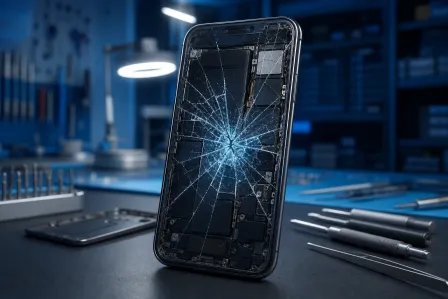
The obvious signs are a cracked panel, ink-like black blotches, rainbow distortion, broad vertical or horizontal lines, or a display that remains black despite a working backlight or confirmed cable connection. A hinge can cause these failures by twisting the lid, crushing the edge of the panel, or pulling a cable hard enough to damage the connector.
Here is the myth to retire: a black screen does not always equal a dead screen panel. It could be a cable, backlight issue, motherboard issue, or a display setting problem. Conversely, a screen that still shows a picture is not automatically safe. If the lid structure is bent and continues to flex, the panel can crack later.
A technician should inspect the hinge assembly, display cable, panel, and lid frame together. Replacing only the screen while leaving a seized hinge in place is a very expensive way to create repeat business. Not the fun kind.
When a panel-only replacement makes sense
This route can be reasonable if:
- The hinge mounting structure is repairable or already repaired.
- The lid frame is not warped enough to stress a new panel.
- A compatible replacement panel is available.
- The laptop has enough remaining useful life to justify the work.
The new panel should be installed only after the hinge movement is smooth and correctly aligned. The goal is not merely to make the image return. The goal is to make sure the next open-close cycle does not undo the repair.
Option 5: Replace the full display assembly
Sometimes the cleanest repair is a complete top assembly, including the display panel, lid cover, hinges, bezel, camera, and cables, depending on the model.
This is often recommended when multiple items are damaged at once. For example, the hinge has ripped out of the lid, the bezel is detached, the panel has pressure damage, and the display cable flickers. Piecing together individual parts may be possible, but it can be less reliable or more labor-intensive than replacing the full assembly.
Full assemblies are particularly common on models where the screen is bonded to the frame, where the bezel is not intended to be removed separately, or where matching parts are hard to source individually.
Benefits of the full-assembly route
- New structural mounting points for the hinges.
- Reduced risk of reusing a warped lid or damaged bezel.
- Fewer questionable parts left behind.
- Cleaner alignment and finish when the assembly is compatible and installed correctly.
The tradeoff
The full assembly may cost more than a hinge, cable, or panel-only repair. It can also be the only sensible option for a very thin laptop, a premium model with integrated components, or a unit with broad physical damage.
The decision should be based on the laptop's condition as a whole. If it also has a failing battery, worn keyboard, storage errors, and years of heavy use, it is fair to ask whether a larger repair makes sense. A good repair shop should give you the straight answer, even if that answer is, “This one may be ready for a graceful retirement.”
What not to do with a damaged laptop hinge
A hinge problem is mechanical damage. Software updates, driver reinstalls, and restarting the laptop will not fix it. Yes, turning it off and on again is magical sometimes. This is not one of those times.
Avoid these moves:
- Do not force the lid open or shut. Stop if it binds, cracks, or requires unusual force.
- Do not carry the laptop by the screen. Lift it from the base with two hands.
- Do not use super glue as a permanent structural repair. It rarely handles repeated hinge stress well and can make professional repair harder.
- Do not tape the lid tightly closed over a damaged panel. Pressure can crack the screen.
- Do not keep flexing the lid to see whether the screen flickers. One test is information. Twenty tests are sabotage.
- Do not ignore a loose bezel or exposed cable. Small damage can become panel damage quickly.
If the laptop still starts, back up your important files promptly. Hinge damage normally does not affect data directly, but accidents happen, and a laptop that cannot safely close or travel is more vulnerable to further damage. If you need help protecting files before bringing it in, remote support may be useful for backup guidance when the computer can remain safely powered on.
How to decide which repair is right for your laptop
Start with four questions.
1. Does the screen image look normal? If yes, there is a real chance of saving the original panel.
2. Does the lid move smoothly? A stiff, grinding, or popping hinge can cause more damage every time it moves.
3. Is the case separating near either hinge? That points to damaged mounting points, not just a loose hinge.
4. Does the display change when the lid moves? Flickering, blackouts, and angle-dependent issues suggest cable or panel stress.
A hands-on inspection is the only way to know the full extent of the problem. A technician needs to remove the relevant covers, inspect the hinge anchors, check cable routing, assess the panel, and make sure the laptop can open and close without undue force.
For West Palm Beach, Palm Beach County, and Treasure Coast laptop owners, Fix My PC Store can assess the damage and explain the repair options plainly. You can schedule a repair when the laptop is safe to transport, or contact the shop if the lid is jammed, the screen is separating, or you are unsure how to handle it without making matters worse.
Verdict
Laptop hinge damage can often be repaired without replacing the screen. If the panel displays normally and the damage is limited to the hinge or its mounting hardware, a targeted hinge, lid, or chassis repair may preserve the original screen.
A screen replacement is warranted when the panel is cracked, distorted, or fails testing. A full display assembly is often the better choice when the hinge has damaged the lid, bezel, cable, and panel together.
The smart move is to stop forcing the lid, back up your data, and get the hinge area inspected before a repairable mechanical issue turns into a broken display. Your laptop hinge is not supposed to sound like a bag of tortilla chips. That is your cue.
Computer acting up? Get a real diagnosis.
Fix My PC Store offers free diagnostics and honest pricing with no upsell games.