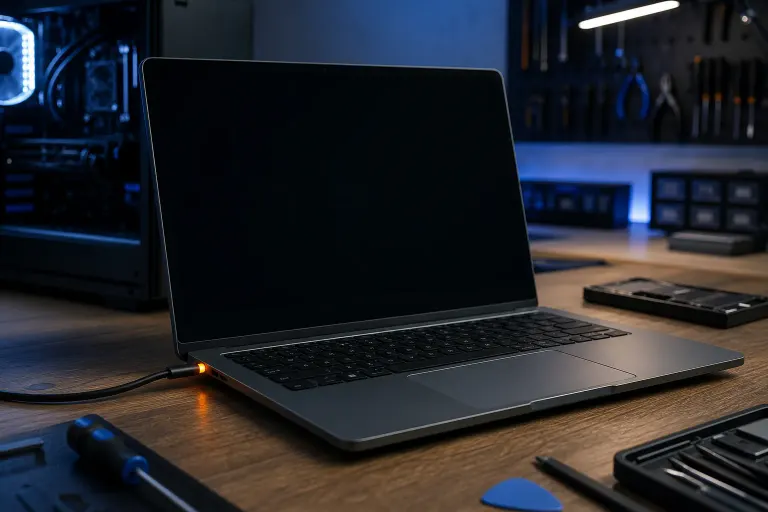
Laptop Charging Light On but Won’t Turn On? What It Means
TL;DR: If your laptop’s charging light is on but pressing the power button does nothing, the charger and charge circuit may be receiving power. That does not prove the battery, display, power button, motherboard, or Windows is working. Start with a full power reset and a proper charger check before assuming the laptop is dead.
What you need
You do not need a screwdriver for the first round. Good. Most people reach for a screwdriver far too early, then lose a tiny screw in the carpet and invent a new problem.
Gather these items:
- The laptop’s correct charger, preferably the original one
- A known-good wall outlet
- A flashlight
- A clean, dry work surface
- A paper clip only if your model has a clearly labeled emergency battery-reset hole
- A second compatible USB-C charger, if your laptop charges through USB-C and you have one
Do not open the laptop yet. Do not jab random holes with a paper clip. Some holes are microphones, not secret resurrection buttons. Also, do not use a swollen battery as a science project. If the case is bulging, the trackpad is lifting, or the bottom cover will not sit flat, unplug it and stop using it.
1. Read the charging light correctly
A charging indicator is a clue, not a diagnosis. It usually means the laptop detects incoming power at the charging port or charging circuit. On many models, amber or orange means the battery is charging, while white, blue, or green may mean the battery is full or the adapter is connected. Exact colors vary by manufacturer, because apparently standardization was too much to ask.
The light does not guarantee that:
- The charger is supplying enough wattage to start the laptop
- The battery can hold or deliver power
- The power button is working
- The motherboard can begin its startup sequence
- The display is working
- Windows is loading
Pay attention to behavior. Does the light come on only when the charger plug is held at a certain angle? Does it blink in a repeating pattern? Does it turn off when you press the power button? Write down what you see. Repeating blink patterns can be diagnostic codes on certain laptops, and a repair technician can use that detail.
If the charging light appears but is weak, flickers, or changes when you move the plug, suspect the charger, cable, charging port, or DC-in jack first. That is a physical power problem, not something a Windows update caused. Windows is guilty of plenty, just not that.
2. Check the outlet, charger, cable, and port
Start at the wall and work toward the laptop. Plug the charger directly into a different wall outlet. Skip power strips, surge protectors, extension cords, and docking stations for this test. Any one of those can fail quietly while still looking perfectly respectable.
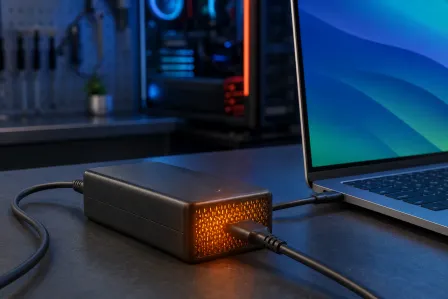
Inspect the charger brick and cable from end to end. Look for cuts, exposed wire, scorching, sharp bends near the connector, or a loose barrel tip. If the adapter has its own LED, see whether it stays lit when connected to the laptop. A light that goes out when you plug into the laptop can point to a shorted charging port or internal power fault.
For a barrel-type charger:
- Confirm it is the correct charger for that laptop.
- Make sure the connector fits firmly without excessive wiggle.
- Check whether the center pin is bent, missing, or damaged.
- Avoid universal bargain-bin adapters unless their voltage, polarity, connector, and wattage are verified. Cheap mystery chargers are how a minor problem becomes a motherboard problem.
For USB-C charging:
- Try every USB-C port marked for charging, if the laptop has more than one.
- Remove docks, hubs, monitors, flash drives, and phone chargers.
- Use a charger known to provide enough power for the laptop. A low-power phone charger may illuminate a charge light but still be unable to run or wake the system.
- Inspect the port for packed lint, bent pins, corrosion, or looseness.
Do not dig inside a USB-C port with metal tools. A wooden toothpick or a soft plastic pick is safer if you can clearly see lint and the laptop is fully unplugged. If you cannot see what you are doing, leave it alone. Blind scraping is not maintenance.
If you have access to another verified compatible charger, test it. This is one of the cleanest ways to eliminate a bad adapter. If the second charger changes nothing, the laptop itself needs closer attention.
3. Perform a full power reset
Laptops can get stuck in a bad power state. It happens after a crash, sleep problem, static discharge, firmware hiccup, docking issue, or battery glitch. The charge light may remain on while the system refuses to respond. A full power reset clears residual electrical charge and can reset the embedded controller.
Follow this order:
- Disconnect the charger.
- Unplug every accessory. That includes USB devices, memory cards, HDMI cables, docks, Ethernet, external monitors, and wireless dongles.
- If the battery is removable, remove it. Most newer laptops do not have an external removable battery, so do not force anything.
- Hold the power button down continuously for 30 to 60 seconds.
- Release the button.
- Reconnect only the charger.
- Wait five minutes, especially if the battery may be deeply discharged.
- Press the power button once normally. Do not hold it down unless you are trying to force a shutdown.
If it starts, let it boot fully and then back up important files immediately. A laptop that suddenly begins behaving after repeated freezes or no-power events is making a complaint. Listen before it escalates.
For laptops with a labeled emergency reset pinhole, consult the manufacturer’s documentation for that exact model before using it. It is often on the bottom panel and may require pressing it briefly with a paper clip while disconnected from AC power. Only use a hole clearly identified as an emergency reset or battery reset. Random poking is not a repair strategy.
4. Rule out a display problem before declaring it dead
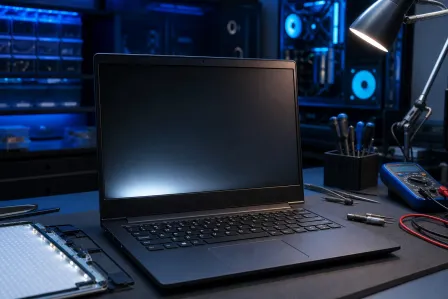
Sometimes the laptop is on, but the built-in screen stays black. That is a different branch of the problem. You may see keyboard backlighting, hear a fan, feel warmth near the vent, or notice the Caps Lock key responding. A charging light alone does not prove this, but these extra signs matter.
Press the brightness-up key several times. Then try the display toggle key, usually marked with a monitor icon and sometimes used with the Fn key. If an external display had been connected recently, the laptop may be trying to send its picture somewhere else. Again, computers have an impressive ability to hide the image you need.
If it appears to be running, connect a known-good external monitor or TV with the appropriate cable. Give it a minute or two after pressing power. If the external screen works while the laptop panel stays black, the issue may involve the internal display, display cable, backlight, or lid sensor rather than the charging system.
If the laptop shows signs of activity but no image anywhere, do not keep force-restarting it twenty times. It may have a memory, motherboard, graphics, or firmware issue. Those need a proper hands-on diagnosis. Our laptop repair team can test the power sequence and display path without guessing at expensive parts.
Computer acting up? Get a real diagnosis. Book a free diagnostic
5. Try one controlled startup with the battery isolated
A failed battery can sometimes prevent startup even with the charger attached. Whether you can isolate it depends on the laptop design.
If your laptop has a removable battery, remove it, connect the correct charger, and try to power on with AC only. If it starts reliably this way, the battery is a prime suspect. Replace it with a quality, compatible battery rather than the cheapest anonymous listing you can find. Lithium batteries deserve a bit more respect than a phone case.
If the battery is internal, do not immediately dismantle the system. Some laptops have a BIOS setting, reset procedure, or battery disconnect method, but these differ by model. Opening a modern laptop may involve fragile clips, hidden screws, or a battery cable positioned beside components that do not enjoy being shorted.
A qualified technician can disconnect the internal battery, test adapter input, inspect the charging port, and measure whether the board is receiving the correct standby power. If your laptop contains important files, tell them that before authorizing work. A power failure is not automatically a data loss event, and preserving the drive should be part of the plan.
If it is a Mac, power behavior and battery handling vary substantially by model. Intel Macs and Apple silicon Macs use different startup and reset procedures. Avoid following generic “Mac reset” videos that do not identify your exact machine. For local help with a Mac that charges but will not start, see our Mac repair service.
6. Watch for clues that point to internal hardware trouble
After the charger check and power reset, certain symptoms suggest this is beyond a simple stuck state.
Signs of a charging-port or power-input problem
- Charging light flickers when the connector moves
- Plug feels loose or does not seat fully
- Adapter gets unusually hot
- The laptop charges only at a particular angle
- A known-good charger does not maintain a steady indicator
A worn DC jack or damaged USB-C port can often be repaired, but waiting can damage the board around it. Stop twisting the cable into its one sacred working position. That trick tends to end with a broken port.
Signs of a battery problem
- Laptop only works with the charger connected
- Battery percentage never rises or drops abruptly
- Case, palm rest, or trackpad is lifting
- Laptop shuts down as soon as the adapter is removed
- Charge light reports activity, but the laptop will not start from battery
A swollen battery is urgent. Unplug the charger and arrange service. Do not puncture it, squeeze the case shut, or toss it in household trash.
Signs of a motherboard, memory, or power-button fault
- No fan, no keyboard light, no screen response, even with a verified charger
- Charging LED works but pressing power produces absolutely nothing
- Repeating blink codes or beep patterns occur
- The laptop was dropped, exposed to liquid, or suffered a power surge
- There is a burnt smell, unusual heat, clicking, or visible corrosion
Liquid damage deserves special mention. Do not plug in or repeatedly attempt to start a wet laptop. Power plus residue is how corrosion earns overtime. Disconnect power and get it evaluated promptly. If you are in Palm Beach County or the Treasure Coast, book a diagnostic rather than letting the machine sit around getting worse.
7. Protect your files and decide when to seek repair
If the laptop turns on after these steps, back up your files before doing anything else. Use an external drive or a trusted cloud service. A machine that has already had a power issue has earned less trust, not more.
If it does not turn on, a repair shop can usually determine whether the fault is the adapter, battery, charging port, power button, memory, display, storage, or motherboard. The most useful information you can provide is simple:
- Laptop brand and exact model
- What happened before the failure
- Whether it was dropped, wet, recently updated, or connected to a new dock
- Whether the charging light changes color or blinks
- Whether fans, lights, or sounds occur when power is pressed
- Whether another compatible charger was tested
For work laptops, do not make a bad situation worse by attempting random firmware resets or opening a company-owned device without approval. If your office relies on several laptops, recurring charger and power failures may be an inventory, standardization, or electrical issue. Our managed IT support can help South Florida businesses keep devices, backups, and replacement planning from becoming a weekly fire drill.
Remote support is useful once the laptop can power on and reach the desktop. It cannot repair a dead power circuit through the internet, despite what some scammer with a pop-up warning would have you believe. When the machine starts but behaves oddly afterward, remote support can help with software cleanup, updates, and file checks.
Common mistakes
Assuming the charge light means the battery is good. It only confirms part of the power path is alive. A bad battery, weak adapter, failed port, or motherboard fault can still produce a light.
Using an underpowered USB-C charger. A phone charger may provide enough power to trigger an indicator but not enough to boot a laptop. Use the correct wattage and a capable USB-C cable.
Holding the power button for two seconds and calling it a reset. A 30-to-60-second power-button hold is a common reset attempt, but the correct reset procedure and its effect vary by model; check the manufacturer’s documentation when available.
Leaving every accessory attached. Docks, damaged USB devices, hubs, and external displays can interfere with startup. Test the laptop bare, with only its charger attached.
Forcing a swollen or damaged case closed. Swelling is not cosmetic. Stop using the laptop and arrange battery service.
Opening the laptop without a reason or a plan. Modern laptop internals are cramped and fragile. One stripped screw or torn battery connector can convert a repair into a more expensive repair.
Falling for pop-up support scams after it eventually boots. A browser warning claiming your computer is locked, infected, or about to explode is a scam. Close the browser, do not call the number, and get legitimate help if you are unsure.
Bottom line
A laptop with a charging light but no startup response is not necessarily dead. First verify the outlet and charger, remove accessories, and perform a complete power reset. Then distinguish a true no-power condition from a black-screen problem and watch for signs of battery, port, or board damage.
If a known-good charger and a proper reset do nothing, stop guessing. A hands-on computer repair diagnostic is the sensible next step, especially if the laptop holds important work, school, or family files. Better to find the failed part than buy a new laptop because a charging light told a half-truth.
Computer acting up? Get a real diagnosis.
Fix My PC Store has repaired thousands of machines across West Palm Beach. Free diagnostics, honest pricing, no upsell games.