Passkeys Remote Support Goes Mainstream in 2026: No Passwords
Listen to this article
TL;DR: In 2026, passkeys remote support is becoming the practical default because it removes the most fragile part of remote help: shared, reused, phished passwords. Passkeys change how customers approve remote access, how technicians authenticate to tools, and how businesses control admin-level remote sessions.
From an operational standpoint, this is infrastructure work. You either build a workflow that assumes passwords will leak, or you replace passwords with authentication that is harder to steal and easier to verify under pressure.
Why passkeys are taking over remote helpdesk authentication in 2026
Before we talk about how, we need to be clear about why. Passwords fail because they are portable secrets. They can be copied, replayed, guessed, phished, reused, and dumped. Remote support is the perfect environment for password failure because it blends urgency, trust, and access.
Here’s what actually breaks in real environments:
- Phishing during support: a user is told to “confirm your login” while a tech session is active. If the user types a password into the wrong place, the attacker wins.
- Reuse across services: one breached site turns into email takeover, then resets for everything else.
- Helpdesk social engineering: attackers pressure staff into resetting passwords or approving access without strong verification.
- Lockouts: repeated failed logins, forgotten passwords, or MFA fatigue causes delays when the user needs help fast.
Passkeys reduce these failure points because they are built on FIDO2/WebAuthn support. The private key stays on the user’s device (or within the device’s secure hardware). The service gets a public key. When you sign in, you prove possession of the private key by signing a challenge. There is no password to type, steal, or reuse.
Passkeys, FIDO2, and WebAuthn support: what they actually are
Passkeys are a user-friendly name for credentials based on WebAuthn (the web standard) and FIDO2 (the ecosystem and certification). In practice, a passkey sign-in has three moving parts:
- Registration: you create a passkey for an account. The account stores the public key.
- User verification: you unlock the passkey with a biometric (Face ID, Touch ID, Windows Hello) or a device PIN.
- Challenge-response: the device signs a login challenge. The server verifies the signature with the public key.
The key point for secure remote login: even if someone builds a perfect phishing page, there is no password to hand over. The passkey will only sign the correct challenge for the legitimate site or app.
Where passkeys live: Windows, Apple, and Google
Passkeys are now common across the platforms people in Palm Beach County actually use:
- Windows passkeys: Windows 10 and Windows 11 support WebAuthn. Users typically unlock with Windows Hello (PIN/biometric) and then authenticate to supported sites/apps.
- Apple iCloud Keychain passkeys: Apple devices can store and sync passkeys via iCloud Keychain, allowing sign-in across devices tied to the same Apple ID.
- Google Password Manager passkeys: Google accounts can store and sync passkeys, enabling passwordless sign-in on supported services across Android and Chrome-based workflows.
Each ecosystem has different recovery and device-change behavior. That matters for support, because recovery is where security and downtime collide.
Passkeys remote support: what changes in the workflow
Remote support is a chain of approvals. Chains fail at weak links. Passkeys do not magically secure everything, but they move the weak link away from “a human typed a secret into a box” and toward “a device proved it holds a private key.”
Mentally diagram the remote support workflow like this:
- User requests help
- Technician identity is verified
- User approves remote session
- Elevation to admin (if needed)
- Session logging and closure
Passkeys impact steps 2 through 4 the most.
1) Verifying the technician: reducing impersonation
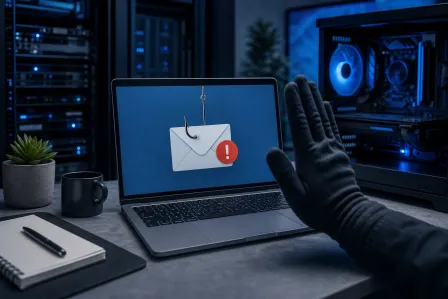
A classic failure mode is the “fake technician” problem. Attackers call, email, or pop up a fake alert and then request remote access. If the customer has no reliable way to validate identity, the attacker becomes the helpdesk.
With passkeys and strong sign-in on the support portal, a legitimate technician can authenticate to tools using phishing-resistant methods, and the customer can be trained to verify the request via a known channel. The operational goal is simple: no remote session starts from an unverified inbound request.
If you need remote help, start from a known-good entry point like our remote IT support service page, not from a random inbound call or popup.
2) Approving the remote session: fewer passwords, fewer lockouts
In password-based approvals, the user is often asked to log into email, a portal, or an identity provider while stressed. This works fine until it doesn’t. And when it doesn’t, it fails hard: lockout, compromised account, or both.
With passwordless remote access approvals using passkeys, the user is more likely to see a familiar device prompt: unlock with Face ID/Touch ID, a device PIN, or Windows Hello. That reduces:
- Typing errors that cause lockouts
- Password resets that create new social-engineering openings
- Phishing success rates during urgent support
3) Admin access during support: the real risk zone
Remote support often starts as standard user access. Then you hit the wall: driver installs, security tool repairs, system settings, business app fixes. That requires elevation.
Here’s the operational reality: admin elevation is where attackers want to be. If an attacker gets admin, they can disable security tools, install persistence, create new accounts, and exfiltrate data.
Best practice is to treat admin authentication as a separate control point with its own policies:
- Use separate admin accounts (no daily-driver admin use).
- Require phishing-resistant authentication for admin portals where possible.
- Log every elevation event and tie it to a ticket.
For businesses, this is where managed policy and identity controls matter. If uptime and auditability matter, this step isn’t optional. Our managed IT services work is largely about removing single points of failure like shared admin passwords.
Account takeover prevention: why passkeys help, and what they do not fix
Passkeys are strong against phishing and credential stuffing, which are two of the highest-volume causes of account takeover. That’s the “why” behind the industry shift.
But prevention is about understanding remaining failure modes:
- Device compromise: if a device is infected and an attacker can approve prompts or hijack sessions, you still have a problem. Passkeys are not anti-malware.
- Account recovery weak links: if recovery falls back to SMS, insecure email, or easily-social-engineered support, attackers pivot there.
- Wrong-session approval: users can still approve something they should not if they do not verify the request source.
So yes, passkeys are a major step for account takeover prevention. No, they are not a substitute for endpoint protection, patching, and a clean support process.
For background on common phishing patterns that lead to takeover, see Malwarebytes research on phishing and account takeover tactics.
Remote session security: a practical checklist for Palm Beach County users
From an operational standpoint, the goal is consistent outcomes: fast support without creating new risk. Here is a repeatable checklist that works for households, remote workers, and small offices in West Palm Beach, Boca Raton, Wellington, Royal Palm Beach, Lake Worth Beach, Palm Springs, Riviera Beach, and Palm Beach Gardens.
A. Before you need help (prevention)
- Enable passkeys where your critical accounts support them (email, banking, primary cloud accounts). If the option exists, use it.
- Keep at least two recovery methods that you control. Do not rely on a single phone number or a single email inbox as your only recovery path.
- Secure the device that holds your passkeys: strong device PIN, biometric enabled, and OS updates installed.
- Reduce single points of failure: if one device is your only passkey holder and it breaks, you just built your own outage.
- Write down your support entry point: bookmark the official support page you will use when something goes wrong.
B. When you are in a remote support session (control points)
- Confirm the request source: start from your known link, not from a popup or cold call. Use secure remote support intake rather than inbound surprises.
- Approve prompts intentionally: if you see a passkey or sign-in prompt you did not initiate, stop and ask why. Wrong prompt approvals are still approvals.
- Limit elevation: only approve admin prompts when the tech explains the change and the consequence.
- Keep session scope tight: the goal is to fix the issue, not browse unrelated accounts during the session.
C. After the session (verification)
- Close the remote tool and reboot if system changes were made.
- Review recent sign-ins on key accounts if you suspect anything unusual.
- Document what was changed (accounts, settings, installed tools). This prevents repeat incidents.
Business workflows: passkeys and remote helpdesk authentication at scale
Small businesses in Palm Beach County tend to grow into complexity without noticing. One day you have five users and one shared admin login. The next day you have twenty users, remote work, a line-of-business app, and a compliance questionnaire. That’s where password-based remote support becomes fragile.
Here’s the system view for businesses:
- Identity layer: enforce phishing-resistant sign-in where supported (passkeys/WebAuthn).
- Device layer: patching, endpoint protection, and disk encryption to reduce device compromise risk.
- Access layer: least privilege, separate admin accounts, and controlled elevation.
- Support layer: ticketing, session logging, and verified technician access.
Passkeys strengthen the identity layer, but you still need the other layers to avoid building new single points of failure. If you want this to be repeatable across staff turnover and device replacements, that’s managed operations work, not a one-time tweak. See managed IT for passwordless access and support controls.
Windows passkeys and secure remote login: what to do on Windows 10 and Windows 11
On Windows, the practical foundation is Windows Hello plus WebAuthn support in modern browsers and apps. The preventative steps are straightforward:
- Turn on Windows Hello (PIN and biometric if available). A weak or shared device PIN becomes a failure point, so treat it like a key.
- Keep Windows updated. Authentication is security plumbing. Outdated plumbing leaks.
- Use supported browsers for passkey flows (modern Edge/Chrome/Firefox). If a site supports passkeys, the browser is part of the chain.
Microsoft’s security documentation is worth referencing for baseline hardening and sign-in protections: Microsoft Support resources on Windows security and sign-in protection.
If your Windows PC is already unstable, fix stability first. Authentication improvements do not help if the endpoint crashes, cannot update, or is infected. That’s when you shift to remediation via computer repair and cleanup services.
What to ask your technician in a passkey-first world
If you want fast support without accidental exposure, ask questions that map to control points:
- How are you verifying my identity and your technician identity? (This prevents the “wrong party” problem.)
- What approvals will I see, and when? (This prevents blind prompt acceptance.)
- Will you need admin elevation? If yes, what changes are being made and what is the rollback plan?
- What is logged? (Tickets, session notes, and changes reduce repeat incidents.)
Dry wit, but true: a support process without verification is just a well-lit hallway to your data.
Need Help Right Now?
Get instant remote IT support from Palm Beach County's trusted technicians - no appointment needed.
Get Remote Help