Browser-Based Remote Support in 2026: Safer Alternatives to Quick Assist
Listen to this article
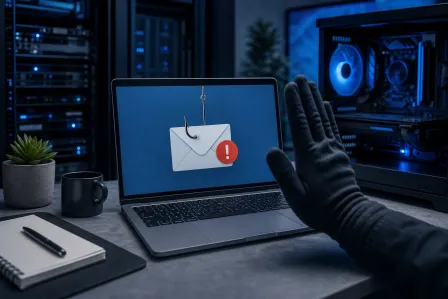
TL;DR: browser-based remote support is gaining ground in 2026 because it reduces the risk of permanent remote agents while making it faster for end users to get help. If you care about predictable outcomes, the winning pattern is session-based access: explicit consent, time-limited codes, restricted features (clipboard and file transfer), and logging you can audit later.
From an operational standpoint, remote support is not “a tool.” It is a workflow with failure points. The question is not whether a session works when everything is normal. The question is what happens when a user clicks the wrong thing, when an attacker calls pretending to be support, or when a helper accidentally gains more access than intended.
Why browser-based remote support is trending in 2026
Let’s start with the WHY, because the HOW only makes sense after you understand the risk model. Traditional remote support often relied on installing an agent that stays on the machine for later. That works fine until it doesn’t. And when it doesn’t, it fails hard.
Here’s what actually breaks in real environments:
- Unattended agents become a standing invitation. If credentials are phished, reused, or poorly managed, the attacker doesn’t need a new exploit. They use your own remote tool.
- Users approve the wrong session. Social engineering is a primary failure point. People are trained to “click Allow” to get unstuck.
- Over-permissioned sessions create blast radius. Clipboard sync, file transfer, and admin elevation can turn “help me print” into “exfiltrate data” if misused.
- Lack of auditability makes recovery expensive. If you cannot prove what happened, you cannot contain it cleanly.
Browser-based remote support reduces some of these risks by default. Not all of them, but enough that it’s become the preferred pattern for many support scenarios: remote support without installs, minimal persistence, and a smaller configuration surface area for end users.
How browser-based remote support works (session-based access)
Mentally diagram it like a controlled tunnel that exists only long enough to do the job.
Step-by-step session flow
- User initiates from a link (typically a support portal or vendor page) inside their browser.
- A session code is generated that is time-limited. The code is the gate.
- Consent is requested before screen sharing or control begins. This is the first hard stop.
- Permissions are scoped (view-only vs control, file transfer on/off, clipboard on/off, etc.). Least privilege matters here.
- Session ends cleanly and the “tunnel” closes. No permanent agent is left behind in the ideal model.
The operational benefit is consistency: fewer installs, fewer “it won’t run” blockers, and fewer long-lived access paths that need to be monitored forever.
Quick Assist alternatives: what to use and what to avoid
On Windows 11, Quick Assist remains a common built-in option for consent-based remote help. It can be useful, but it is not the only approach, and it is not automatically the safest approach. Safety is a property of the workflow and controls, not the brand name.
If you want the baseline on Quick Assist itself, Microsoft documents its usage here: Microsoft Support: Use Quick Assist for remote help.
What “safer” means in practice
When people ask for Quick Assist alternatives, they usually mean one of these requirements:
- No installs (or minimal installs) to reduce friction and reduce persistence.
- Session-based access with time limits and clear end-of-session behavior.
- Stronger controls around file transfer, clipboard, and elevation.
- Better logging for accountability and incident response.
From a prevention standpoint, you should avoid any remote support setup that quietly creates unattended access on a home PC or a small business workstation unless you also have the operational maturity to manage it: unique credentials, MFA, device inventory, patching, and periodic access reviews.
Security controls that matter most for secure remote access setup
Here’s the part most people skip. They choose a tool, run a session, and call it done. Then they act surprised when the same pathway is used later by a scammer. If uptime and safety matter, this section is non-negotiable.
1) Explicit consent prompts (and visible indicators)
Consent prompts are your guardrail against silent takeover. You want:
- Clear “Allow” actions required from the user
- On-screen indicators that remote control is active
- Easy disconnect for the user at any time
Consequence of skipping: the user cannot distinguish legitimate support from unauthorized access, and that is how remote access scams scale.
2) Time-limited codes and session expiration
Time limits reduce the window of misuse. Codes should expire quickly and be single-use when possible.
Consequence of skipping: a code written on a sticky note or copied into chat becomes a reusable key, not a temporary token.
3) Least privilege remote support (permission scoping)
Least privilege is not a buzzword. It is a way to reduce blast radius. Start with view-only. Escalate to control only if needed. Avoid admin elevation unless the task requires it.
- View-only for diagnosis and guidance
- Control for remediation steps that the user cannot reliably execute
- Admin elevation only when a fix requires system-level changes
Consequence of skipping: you normalize high-privilege sessions, which increases the damage from mistakes and from malicious access.
4) Clipboard and file-transfer restrictions
Clipboard sync and file transfer are high-risk features. They are also sometimes necessary. Treat them like controlled valves in a piping system.
- Disable by default for general troubleshooting
- Enable temporarily only when you have a specific need (driver package, log export, etc.)
- Prefer “pull” over “push” for sensitive files: you request logs, you don’t browse their documents
Consequence of skipping: data leakage becomes a single-click event.
5) Logging and accountability
Logging is what turns “we think” into “we know.” At minimum, you want records of:
- Session start and end time
- Who initiated and who connected
- Whether control was granted
- Whether file transfer was used
Consequence of skipping: when something goes wrong, containment takes longer, legal exposure increases, and customers lose trust for reasons you cannot fix with a discount.
When browser-based remote support is safer than unattended access
In practice, browser-based sessions are safer when the support need is episodic and user-present. Think: “help me resolve this problem now,” not “always-on management.”
Good fits for session-based remote troubleshooting
- Removing a stubborn application error on Windows 11
- Fixing browser hijacks and unwanted extensions (after verifying the root cause)
- Email client configuration and authentication issues
- Printer mapping and driver validation
- Guided backups and data migration checks
When unattended access is justified (and how to do it responsibly)
For businesses, unattended access can be operationally necessary for after-hours maintenance, patching, and rapid response. The key is to treat it like infrastructure:
- Use MFA and unique accounts per technician
- Maintain an asset inventory and remove stale endpoints
- Review access regularly
- Centralize logging
If you are running a small office in Palm Beach County, this is where managed services matter. A controlled, monitored approach is typically safer than ad-hoc remote tools installed “just in case.” See our managed IT services for businesses for the operational model that supports it.
Remote support for Windows 11: a practical, safer workflow
Let me walk you through the failure modes, then the workflow that reduces them.
Common failure modes on Windows 11 remote help calls
- User is rushed and approves prompts without reading
- Multiple windows hide security prompts or session indicators
- Admin credentials are shared casually during troubleshooting
- Security software conflicts block legitimate tools and train users to disable protection
A repeatable secure remote access setup checklist
- Verify identity and intent: confirm the user contacted us through known channels, not a random inbound call.
- Explain the boundaries: what we will access, what we will not access, and how the user can disconnect.
- Start session with least privilege: view-only first, then escalate if needed.
- Disable high-risk features by default: clipboard and file transfer off unless explicitly required.
- Document actions taken: what changed, what was installed or removed, and what the user should expect next.
- End session and confirm closure: ensure the remote connection is terminated before discussing passwords or sensitive info.
If the issue cannot be resolved remotely or hardware is suspect, remote support should stop and hands-on service should begin. That handoff is part of a healthy system. For local drop-off or onsite diagnostics, use computer repair services.
Consent-based screen sharing: protecting users from remote access scams
Scams keep working because the “support experience” looks similar whether it is legitimate or malicious. Your defense is process clarity and user education.
Rules we recommend for residents and small businesses
- Never accept unsolicited remote support. If someone calls you, assume it is hostile until verified.
- Use time-limited session codes, and do not reuse them.
- Watch for permission creep: if the helper asks for admin access, file transfer, or password entry, ask why.
- Prefer user-present sessions for home devices. Unattended tools are easy to forget and hard to audit.
For ongoing awareness, Malwarebytes maintains practical write-ups on remote access scams and prevention patterns: Malwarebytes Blog: remote access scams and prevention.
Remote IT support in Palm Beach County: what Fix My PC Store does differently
Fix My PC Store operates in West Palm Beach and across Palm Beach County. From an operational standpoint, our goal is simple: resolve issues quickly while minimizing exposure. That means we prefer session-based access for most residential and many small business scenarios, and we treat elevated access as a controlled exception.
What you can expect from our remote troubleshooting
- Fast start with install-free or minimal-install sessions when feasible
- Clear consent before any control is requested
- Least privilege by default with explicit escalation only when needed
- Practical hardening advice after the fix so the same issue does not recur
If you need help right now, start with our remote IT support service. If the situation points to failing storage, overheating, or physical damage, we will recommend the right next step instead of forcing a remote-only solution.
Bottom line: choose the workflow, not the hype
Browser-based remote support is not magic. It is simply a better default for many scenarios because it reduces persistence and encourages consent-based access. But the real safety gains come from the controls: time limits, least privilege, restrictions on data movement, and logs.
Build the process once, run it the same way every time, and you eliminate most of the avoidable disasters.
Need Help Right Now?
Get instant remote IT support from Palm Beach County's trusted technicians - no appointment needed.
Get Remote Help