RTX 50-Series Power Spikes: Prevent Black Screens in 2026
Listen to this article
TL;DR: RTX 50-series power spikes can hit so hard and so fast that an older PSU, sketchy adapters, or a poorly seated 12V-2x6 cable can cause black screen under load, instant reboots, or shutdowns that look like “GPU death” but are actually power delivery throwing a tantrum. The fix is usually a clean ATX 3.1 PSU upgrade, correct 12V-2x6 cabling, and (optionally) a little undervolt and power limit tuning for rock-solid, butter smooth gameplay in 2026.
Alright gamers, Hardware Hank here. If your monster rig is cracked in every benchmark but randomly faceplants into a black screen the moment you launch a heavy title or hit a loading spike, don’t panic. This is one of the most common “it runs until it doesn’t” issues I’m seeing with modern high-end GPUs: GPU transient spikes plus strict connector requirements. The good news? This is fixable, and you can do it without sacrificing the FPS you built the rig for.
What RTX 50-series power spikes look like (and why they cause black screens)
Let’s talk about what’s actually happening. Modern GPUs can jump power demand extremely quickly (that’s the “transient” part). Your average power draw might look fine, but the instantaneous spike can be the thing that trips protections on the PSU or destabilizes the GPU power rail. Result? Black screen under load, sudden reboot, or a full shutdown like someone yanked the plug. GG.
Common symptoms that scream “power delivery,” not “dead GPU”
- Black screen when a game loads shaders, enters a new area, or you alt-tab into something heavy.
- Instant reboot with no warning, especially when GPU usage jumps from 40% to 95%.
- PC stays on but no display, fans ramp, audio cuts, and you have to hard reset.
- Event Viewer shows Kernel-Power 41 (generic sudden power loss indicator).
- Smell of hot plastic or visible discoloration at the GPU power connector (stop immediately if you see this).
Why “average wattage” is not the whole story
This is the part that confuses even experienced builders. Your PSU might be “850W” and your system might “only” pull 550W in a typical benchmark. But if the GPU spikes hard and the PSU can’t deliver stable current fast enough, protections can trip or voltage can droop. That’s when stability goes from “it runs” to “black screen roulette.”
Supporting image suggestion: Place 12v-2x6-connector-seating-inspection-guide.jpg after this section to show proper insertion and what heat marks look like.
ATX 3.1 PSU upgrade basics (the real fix for RTX 50-series power spikes)
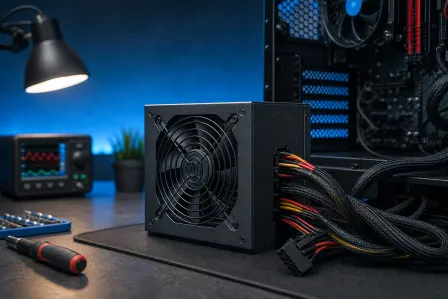
If you’re running a high-end RTX 50-series card and you’re seeing these symptoms, the most reliable solution is usually an ATX 3.1 PSU upgrade from a reputable brand with the correct native GPU power cable. ATX 3.x era PSUs are designed with modern GPU transient behavior in mind, so they handle fast spikes more gracefully than many older designs.
How to size PSU wattage for stability (without wasting money)
I’m never going to clown on a budget build. Bang-for-buck is a skill. But PSU sizing is where you want smart headroom so your rig stays stable and your connectors stay cool.
- Start with your GPU class: higher-tier cards typically need more headroom for spikes.
- Add your CPU reality: a high-core CPU under boost can add meaningful load during gameplay and streaming.
- Leave transient headroom: not just for average draw, but for those “spike moments.”
Rule of thumb: If you’re already near the edge with an older PSU, moving up a tier in wattage and going ATX 3.1 is often the difference between random black screens and a rig that feels locked in.
Quality matters more than the number on the box
Two PSUs can both say “1000W” and behave totally differently under transient load. Look for reputable OEMs, strong reviews, and real test data. A handy third-party reference for PSU testing and certifications is Cybenetics PSU efficiency and noise certifications (not the only source, but a solid baseline for comparing models).
12V-2x6 connector: how to prevent GPU power cable melting (for real)
Now let’s talk about the connector that gets everyone’s attention: the 12V-2x6 connector. When it’s seated correctly and paired with a proper cable from a good PSU, it’s fine. When it’s not seated fully, or when the cable is stressed, or when someone uses questionable adapters, that’s when things can get spicy in the worst way.
Seating the 12V-2x6 connector correctly (do this every time)
- Push until it clicks and confirm the latch is engaged.
- Visually inspect the gap: it should look fully inserted, not “almost.”
- No wiggly fit: a loose connection increases resistance, which increases heat.
Cable routing for GPU power: bend radius is not optional
This is where the magic happens, and also where people accidentally sabotage their own builds. Don’t crank the cable into a tight side-panel bend right at the connector. Give it breathing room.
- Avoid sharp bends right at the GPU plug.
- Route with slack so the connector is not under constant sideways tension.
- Use cable combs or Velcro straps to keep it clean and reduce strain.
Yes, it also makes the build look clean. And you know I’m here for that RGB-and-cable-management flex.
Adapters and splitters: when to avoid them
If your PSU doesn’t have the right native cable, you’re in the danger zone. Some adapters can work, but they also add connection points and potential resistance. For high-end GPUs, the safest play is: use the PSU’s native 12V-2x6 cable and avoid mystery-meat adapters.
Diagnose black screen under load: power delivery vs GPU failure
Before you RMA your GPU or doompost in your group chat, do a quick reality check. Most of these “GPU is cooked” moments are actually power or connection issues. Here’s how I’d triage it in the shop.
Quick checks you can do at home
- Inspect the connector: power down, unplug, remove the cable, check for discoloration, warping, or burnt smell.
- Reseat everything: GPU, RAM, and the 12V-2x6 cable. A half-seated plug can be a full problem.
- Disable aggressive overclocks: return CPU and GPU to stock temporarily to test stability.
- Check Windows logs: Kernel-Power events can indicate sudden power loss. For general Windows stability steps, see Microsoft Support for Windows troubleshooting.
Signs it’s more likely the PSU (or cabling)
- Crashes happen only under heavy GPU load.
- System is stable in light games but dies in AAA titles or stress tests.
- Reboots are instant with no blue screen.
Signs it might be the GPU (or drivers) instead
- Artifacting, corrupted textures, or crashes even at idle.
- Consistent driver timeouts across multiple PSUs and known-good cables.
- Problems persist after clean driver reinstall and power delivery is verified.
Stabilize RTX 50-series power spikes with undervolting and power limit tuning
Okay, now for the fun part: tuning. If you want to reduce spike severity and improve stability without nuking performance, undervolting RTX 50 and power limit tuning are clutch moves. This is not “making it weaker.” This is optimizing the efficiency curve so the GPU hits the same (or near-same) clocks with less voltage and fewer wild swings.
What undervolting does for gaming (and why FPS often stays banger)
- Lowers peak power draw, which can reduce transient spikes.
- Drops temps, which can improve sustained boost behavior.
- Improves stability in rigs that were right on the edge.
In a lot of real-world gaming, you can keep gameplay butter smooth while shaving meaningful watts. That’s a win-win: less heat, less noise, fewer black screens.
Safe tuning steps (keep it simple, keep it stable)
- Set a modest power limit reduction first (small steps). Test your favorite game and a repeatable benchmark.
- Apply a mild undervolt and validate stability with long sessions, not just a 2-minute run.
- Watch for crash patterns: if it fails fast, back off. If it fails after an hour, you’re close and need a tiny bump.
Important: If you already have connector heat damage symptoms, do not “tune around it.” Fix the cabling and PSU first. Tuning is the polish, not the bandage.
Supporting image suggestion: Place gpu-undervolt-power-limit-stability-tuning.jpg in this section to show monitoring and tuning metrics.
Gaming PC shutdown fix checklist (the no-drama, high-FPS approach)
If you want the “gg ez” checklist that solves most shutdowns and black screens tied to power delivery, here you go:
- Upgrade to a quality ATX 3.1 PSU sized with headroom for your GPU and CPU.
- Use a native 12V-2x6 cable from the PSU, not a random adapter.
- Fully seat the connector and verify latch engagement.
- Route the cable cleanly with no tight bends at the plug.
- Optional: apply a mild undervolt/power limit tune for extra stability and cooler operation.
Palm Beach County help: when to bring it to Fix My PC Store
If you’re in Palm Beach County and your rig is pulling the classic “black screen under load” move, we can diagnose it fast and safely. At Fix My PC Store in West Palm Beach, we see this exact combo all the time: high-end GPU + older PSU + cable stress + transient spikes = chaos.
What we can do in-shop (and why it saves components)
- Confirm PSU stability and power delivery behavior under controlled load.
- Inspect and replace suspect GPU power cables/connectors to prevent heat damage.
- Recommend the right ATX 3.1 PSU upgrade for your build goals and budget.
- Apply safe tuning (undervolt/power limit) for stability without throwing away FPS.
If it’s a desktop tower, start with our gaming PC computer repair and power delivery diagnostics. If you’re dealing with a gaming laptop that’s black-screening or shutting down under load, hit our laptop repair for performance and thermal issues. And if you’re not local or you just want quick triage before you buy parts, our remote support for Windows 10 and Windows 11 troubleshooting can help you confirm symptoms and next steps.
Local service areas: West Palm Beach, Palm Beach Gardens, Lake Worth Beach, Wellington, Royal Palm Beach, Jupiter, and surrounding Palm Beach County neighborhoods.
Ready to Upgrade Your Gaming Rig?
Get expert gaming PC builds, upgrades, and repairs from Palm Beach County's performance specialists.
Level Up Now