PCIe 5.0 GPU Upgrade in 2026: When You Need a New PSU
Listen to this article
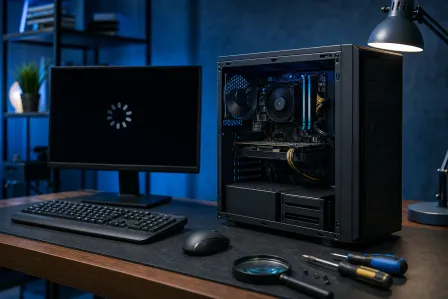
Alright squad, Hardware Hank here, and I need you to hear me loud and clear: a PCIe 5.0 GPU upgrade is one of the most hype, frame-boosting moves you can make in 2026... but it can also be the fastest way to expose a weak power supply. You slap in a new monster GPU, fire up your favorite title, crank settings to “cinematic,” and then BAM: black screen under load, random reboots, or a full shutdown like your PC just rage-quit. GG.
The good news? This is usually fixable and it is not “your GPU is cursed.” Most of the time it’s power delivery: the PSU, the cables, and how modern cards handle GPU power spikes (also called transient spikes). In this guide I’ll break down when your GPU upgrade also needs an ATX 3.1 power supply and the right 12V-2x6 connector, how to tell power issues from driver issues, and the shop-tested upgrade path we use for stable, butter smooth gameplay across Palm Beach County.
Why a PCIe 5.0 GPU Upgrade Can Break a “Perfectly Fine” PSU
It’s not just watts - it’s spikes (transients)
Old-school thinking: “My GPU says 320W, so a 650W PSU should be fine.” In 2026, that logic can get you absolutely dunked on. Modern GPUs can pull very fast, very short power spikes when boosting clocks, loading a new scene, or hitting a heavy ray tracing moment. Your average wattage might look fine, but those spikes can trigger protections in older PSUs or expose borderline cabling.
That’s why the ATX 3.x era exists: it’s designed with modern transient behavior in mind. An ATX 3.1 power supply is built to handle these quick bursts more gracefully and deliver cleaner power during those “FPS clutch” moments.
PCIe 5.0 slot vs PCIe 5.0 power
Quick clarity, because this confuses people: PCIe 5.0 as a motherboard slot standard is about bandwidth. Your GPU power situation is separate. Even if your GPU runs fine in a PCIe 4.0 slot, it can still demand modern power delivery through dedicated GPU power connectors. So yes, you can have a “compatible” GPU that still hard-crashes because the PSU and cables are not up to the job.
ATX 3.1 Power Supply and the 12V-2x6 Connector: The 2026 Power Combo
What 12V-2x6 actually is (and why it matters)
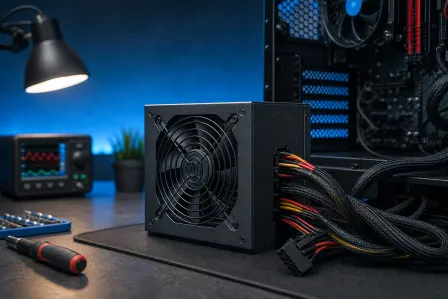
The 12V-2x6 connector is the updated GPU power plug used on many modern high-end graphics cards. It’s the newer version of the 16-pin style GPU connector, designed to improve contact reliability and reduce the chances of connection issues when installed correctly.
Here’s the key gamer takeaway: with high draw GPUs, the connector and cable quality matters as much as total wattage. A loose connection, a bad bend, or the wrong adapter can turn your “new GPU day” into “why is my screen black” day.
Adapters vs native cables (the shop rule)
I’m not here to shame anyone. Sometimes you have to use what you have. But for high-power GPUs, our reliability-first rule is simple: prefer a PSU with a native 12V-2x6 cable rather than stacking adapters. Fewer connection points equals fewer failure points. That means less risk of intermittent shutdowns, less heat at the connector, and more stability when the GPU boosts hard.
If you’re not sure what your system supports, that’s exactly the kind of thing we validate during a gaming PC repair and upgrade check at Fix My PC Store.
Symptoms: Power Problem vs Driver Problem (Stop Guessing, Start Diagnosing)
Gamers love to blame drivers first, and yeah, drivers can be spicy sometimes. But power-related instability has a “signature.” Here’s how I separate driver drama from PSU pain.
Signs you likely need a gaming PC PSU upgrade
- Black screen under load (audio may continue, then full crash or reset)
- Random reboots while gaming with no warning, especially during scene changes
- PC shuts off instantly like someone pulled the plug
- Crashes happen more at higher FPS or uncapped frame rates
- Stability improves if you power-limit the GPU or cap FPS
Signs it might be drivers, OS, or game instability
- Game crashes to desktop but Windows stays stable
- Errors reference specific DLLs or the game engine
- Problems started right after a driver update and roll back helps
- Event Viewer shows driver timeouts without full power loss
If you’re seeing blue screens, Microsoft has a solid starting point for reading symptoms and basic steps here: Microsoft Support guide for troubleshooting blue screen errors. But if your PC is straight-up rebooting under GPU load, that’s where PSU validation becomes priority number one.
Coil whine vs power issue (don’t get baited)
Coil whine is that high-pitched “eeee” you might hear when FPS is sky-high in menus or light scenes. It’s common on powerful GPUs and sometimes even PSUs. Coil whine is not automatically a problem. It’s usually an acoustic side effect of components vibrating under electrical load.
Here’s the difference: coil whine alone does not cause shutdowns. If you have coil whine plus black screens, reboots, or power-offs, then we look deeper: power delivery, connector seating, PSU protections, and GPU boost behavior.
Power Supply Sizing for RTX and Radeon: How Many Watts Do You Actually Need?
Let’s talk sizing like we’re building the ultimate loadout. You don’t size a PSU only for the GPU’s “typical” draw. You size for the whole system, the transient spikes, and future upgrades.
My shop-tested PSU sizing method (simple and safe)
- Start with your GPU class: high-end RTX and Radeon cards can hit big spikes even if average draw looks reasonable.
- Add your CPU reality: modern CPUs can pull serious power under boost, especially with unlocked chips or aggressive motherboard settings.
- Leave headroom: aim to have comfortable overhead so the PSU is not living at its limit.
As a general rule for performance gaming rigs in 2026:
- Midrange GPU + mainstream CPU: a quality 650W to 750W can be great (depending on the exact parts).
- High-end GPU: 750W to 1000W is commonly the stable zone, especially if you’re chasing high FPS at 1440p or 4K.
- Flagship-tier builds, overclocking, or lots of peripherals: 1000W+ can be the “sleep easy” pick.
And please, for the love of clean frames: quality matters. A no-name “1000W” unit that can’t handle spikes is worse than a reputable 750W that can. If you want a neutral, practical overview from a major hardware source, this is a decent baseline read: Intel guidance on choosing a PC power supply for gaming builds.
ATX 3.1: why it’s the move for new GPUs
An ATX 3.1 power supply is built with modern GPU behavior in mind, including handling fast spikes and supporting modern GPU cabling. That means fewer “mystery” shutdowns and less troubleshooting roulette. Your future self will thank you.
Fixing Black Screens and Random Reboots After a GPU Upgrade: The Safe Upgrade Path
When a customer rolls into Fix My PC Store in West Palm Beach with a new GPU and a PC that now acts haunted, here’s the exact checklist we run. No vibes. Just facts.
Step 1: Check the obvious (but do it like a pro)
- Confirm the 12V-2x6 connector is fully seated and latched. Partial insertion can be intermittent under load.
- Check cable bend radius: don’t crank the cable hard right at the connector. Give it breathing room.
- Use the correct cable: PSU manufacturer cables are not universal across brands.
Step 2: Validate PSU health and protections
We look at PSU age, brand/model reputation, and whether it’s designed for modern transients. Older units can degrade over time. Protections can trip earlier than they used to. A PSU that was “fine” with your old GPU can struggle with a new one that boosts harder.
Step 3: Stress test the right way
We don’t just run one benchmark and call it a day. We test combined loads that mimic real gaming: CPU + GPU spikes, sustained heat, and rapid scene changes. If the system fails here, it’s a strong indicator of power delivery instability.
Step 4: Clean driver install (when power checks out)
If power looks solid, then we go after drivers. Corrupt installs and bad update states can cause crashes. If you’re local, we can handle this in-shop. If you’re stuck at home mid-tilt, remote support for gaming PC troubleshooting can often get you stable without waiting.
Step 5: Upgrade the PSU and cable the right way
If the verdict is PSU, we spec an ATX 3.1 unit with the right native cabling for your GPU class, verify stable power under load, and route cables cleanly. Stability first, aesthetics second... but yes, we can make it look absolutely cracked with clean cable management and RGB synergy.
Palm Beach County Gaming PC Upgrade Service: Local Help That’s Actually About Performance
If you’re in Palm Beach County and your new GPU upgrade turned into black screens, random reboots, or shutdowns, don’t waste your weekend swapping parts like trading cards hoping for a miracle. We help gamers across West Palm Beach and nearby areas get stable, high-FPS rigs with the right PSU, correct 12V-2x6 cabling, and validated load testing.
And hey, if you’re also trying to keep a laptop running for school or work while your desktop is in upgrade mode, we do that too: laptop repair services are on deck.
Bottom line: a PCIe 5.0 GPU upgrade is supposed to feel like your PC just got a new heartbeat. If you’re getting crashes instead of clutches, it’s time to look at the PSU, the ATX 3.1 standard, and that 12V-2x6 connection.
Ready to Upgrade Your Gaming Rig?
Get expert gaming PC builds, upgrades, and repairs from Palm Beach County's performance specialists.
Level Up Now