MacBook Pro M4 Overheating After Sequoia 15.4: What To Do
Listen to this article
TL;DR: If your MacBook Pro M4 started running hot, spinning fans like a jet engine, or throttling performance after the Sequoia 15.4 update in 2026 - you are not imagining it. This update has been hammering Apple Silicon thermals hard. Here is exactly what is going on, what you can fix yourself, and when it is time to get a professional to look at it before real damage sets in.
Why Is Your MacBook Pro M4 Overheating After Sequoia 15.4?
Okay, real talk - the M4 chip is an absolute engineering marvel. We are talking Apple Silicon that can chew through creative workloads, gaming sessions, and pro-level tasks while barely breaking a sweat under normal conditions. So when your MacBook Pro starts sounding like a hairdryer and thermal throttling during something as routine as a video call or browser session, something is clearly off. And in 2026, the culprit for a massive chunk of these cases is the Sequoia 15.4 update.
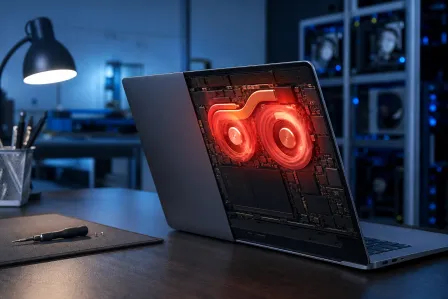
Here is what is happening under the hood. The Sequoia 15.4 rollout introduced updated background system processes, enhanced security scanning routines, and revised memory management behaviors. For many M4 MacBook Pro owners, these background processes - especially kernel_task, mds_stores (Spotlight indexing), and various security daemons - went into overdrive right after the update installed. The M4 chip, brilliant as it is, was suddenly being asked to do a whole lot more work in the background than it was before. More work equals more heat. More heat equals the fans screaming. And when the chip hits its thermal ceiling, it throttles - meaning your buttery smooth performance tanks hard.
Repair shops across Palm Beach County, including our team here at Fix My PC Store in West Palm Beach, started seeing a surge of M4 MacBook Pro owners walking in with exactly this complaint. The pattern is consistent: update installs, machine runs hot for days or even weeks, performance feels sluggish, fans are loud. Classic post-update thermal chaos.
How To Tell If Your M4 Mac Has a Thermal Throttling Problem
Check Activity Monitor First
Before you panic and assume hardware failure, open Activity Monitor (Applications - Utilities - Activity Monitor) and sort by CPU usage. If you see kernel_task sitting at the top chewing 200%, 300%, or more of CPU - that is actually macOS doing its job. kernel_task intentionally hogs CPU cycles to slow the chip down and reduce heat. It is a feature, not a bug. But the question is WHY it is doing that so aggressively after your update.
Also check the Energy tab in Activity Monitor. Look for any process that is listed as having high energy impact. If you see Spotlight, a third-party app, or a background security process going absolutely wild, you have found your heat source.
Use a Temperature Monitoring App
Apps like iStatMenus or Stats (free on GitHub) let you see real-time chip temperatures, fan speeds, and power draw. On an M4 MacBook Pro under normal load, you want to see CPU temps in the 40-60 degrees Celsius range. If you are consistently seeing 85-100 degrees Celsius during light tasks like web browsing or document editing, your system is definitely running hotter than it should be. That is the thermal throttling zone, and staying there long-term is not good for your machine.
DIY Fixes to Try Before Bringing It In
Let Spotlight Finish Reindexing
After a major macOS update, Spotlight reindexes your entire drive. This is one of the biggest post-update heat generators and it can take anywhere from a few hours to a couple of days depending on how much data you have. The fix here is simple - just let it finish. Plug your MacBook in, leave it on, and give it time. Check Activity Monitor to see if mds_stores is still running. Once indexing completes, temps should drop significantly.
Reset NVRAM and SMC Equivalents on Apple Silicon
On Apple Silicon Macs, the traditional SMC reset does not apply the same way it did on Intel machines. However, you can still reset NVRAM. Shut your Mac down completely, then power it back on and immediately hold Option + Command + P + R for about 20 seconds. This clears stored system settings that can sometimes cause abnormal power and thermal behavior. Check out Apple Support's guidance on resetting system settings on Apple Silicon Macs for the full official process.
Check for Runaway Background Apps and Login Items
Some third-party apps do not play nicely with new macOS updates right away. Head to System Settings - General - Login Items and Extensions and disable anything non-essential. Also check for apps that might not have been updated for Sequoia 15.4 compatibility yet. An app running in compatibility mode or throwing errors silently can spike CPU usage and drive up temps hard.
Free Up Storage Space
Apple Silicon Macs use SSD storage as virtual memory (swap). If your drive is nearly full, the system works overtime managing memory, which generates extra heat. Head to System Settings - General - Storage and clear out anything you do not need. Aim to keep at least 15-20% of your storage free for healthy system performance.
Reinstall Sequoia 15.4 Clean
If the above steps do not bring temps down, a clean reinstall of macOS can clear out corrupted update files or misconfigured system processes that are causing the thermal chaos. Back up your data first - and if you need help protecting your files before doing anything drastic, our data recovery and backup services can make sure nothing gets lost in the process.
When DIY Is Not Enough - Signs You Need Professional Mac Repair
Look, I am all about empowering you to fix things yourself when possible. But there are situations where DIY stops being enough and you need someone who actually knows Apple Silicon hardware to take a look. Here are the red flags that mean it is time to bring your M4 MacBook Pro in:
- Fans are loud even at idle after a full week post-update - If Spotlight finished indexing and your Mac still sounds like it is ready for takeoff while doing nothing, something deeper is wrong.
- Thermal throttling during simple tasks - If you are dropping frames in a video call or seeing beach balls while writing an email, your M4 is being choked by heat.
- Unexpected shutdowns or restarts - The system is cutting power to protect the chip. This is a serious warning sign.
- Bottom of the MacBook is uncomfortably hot to the touch - Sustained high surface temps can indicate the thermal paste or internal cooling system needs attention.
- Performance does not recover even after the machine cools down - If your Mac stays sluggish even when temps normalize, there may be a deeper hardware or firmware issue at play.
For any of these scenarios, our professional Mac repair and diagnostics service is exactly what you need. We run full hardware diagnostics on Apple Silicon machines, check thermal performance, inspect cooling systems, and can identify whether your issue is software-side from the update or something that needs hands-on hardware attention.
Also worth knowing - if you are not sure whether your overheating issue might be connected to something like malware or a rogue process that snuck in, we have got you covered there too. Unusual CPU spikes are sometimes a sign of something more sinister running in the background. Read more about that on our Mac virus and malware removal service page.
Can You Get Remote Help for Mac Thermal Issues?
Absolutely - and honestly, for a lot of post-update software-side thermal problems, remote support is a poggers option. Our technicians can connect to your Mac remotely, audit your running processes, check your system logs, uninstall problematic apps, and walk you through the fix in real time without you having to leave your house. If you are in Palm Beach County and want fast help without the drive, check out our remote support service and we can get eyes on your system today.
For hardware-level issues though - thermal paste replacement, fan inspection, or internal cleaning - you will want to bring the machine in physically. Our West Palm Beach shop serves customers throughout Palm Beach County including Boca Raton, Boynton Beach, Lake Worth, Wellington, Jupiter, and surrounding areas.
The Bottom Line on M4 MacBook Pro Overheating in 2026
The M4 chip is genuinely cracked hardware - one of the most thermally efficient processors ever built for a laptop. But even the best silicon can be pushed hard by a software update that is not fully optimized yet. The Sequoia 15.4 thermal issues are real, they are widespread, and they are fixable. Start with the DIY steps, give your machine time to settle after the update, and monitor your temps with a solid app. If things do not improve within a week or two, do not sit on it. Sustained thermal throttling and sustained high heat are not just performance problems - over time they are hardware problems. Get it checked before a fixable software issue turns into a costly repair. Check out Apple's official guidance on MacBook Pro thermal management for more context on how the system is designed to protect itself.
GG to everyone who caught this early. Your M4 MacBook Pro is a monster machine - let's make sure it stays that way.
MacBook Running Hot? We Can Fix That.
Palm Beach County's trusted Mac repair specialists are ready to diagnose your M4 MacBook Pro and get it running cool and fast again. Walk-ins welcome at our West Palm Beach location.
Get Help Today