How to Diagnose Gaming PC Microstutter: Frame Time Fixes
Listen to this article
TL;DR: gaming PC microstutter is what happens when your average FPS looks solid but your frametimes are messy. We’re going to measure a frametime graph, watch for frame time spikes, focus on 1% low FPS, then hunt down the usual culprits: DPC latency, audio drivers, USB polling rate, unstable XMP/RAM, shader cache rebuilds, overlays, power plans, and BIOS/GPU driver stability.
If you’re in Palm Beach County (West Palm Beach, Palm Beach Gardens, Lake Worth Beach, Boynton Beach, Jupiter, Wellington, and nearby), and you want your rig to feel cracked in competitive games, this guide is your roadmap. Let’s get those frames butter smooth.
Gaming PC Microstutter 101: Why FPS Lies and Frametime Tells the Truth
Here’s the cursed scenario: you’re “getting 144 FPS” but it feels like 60. That’s gaming PC microstutter. The reason is simple and brutal: FPS is an average, but your eyes and hands feel frame delivery consistency.
What you actually want is a clean, stable frametime graph. Frametime is measured in milliseconds (ms) per frame. Lower and steadier is better. At 60 FPS, you want about 16.7 ms per frame. At 144 FPS, about 6.9 ms. When you get random jumps (like 7 ms to 25 ms), that’s a frame time spike, and that’s the “chop” you feel mid-fight.
Why 1% Low FPS matters more than your flex-worthy average
1% low FPS is basically your “worst moments” average. It’s a clutch stat because it correlates with stutter and input weirdness. If your average is 160 FPS but your 1% lows are 70, you’re going to feel it. That’s the difference between “it runs” and “it FLIES.”
How to Measure Frame Time Spikes (Tools + What to Look For)
Before you change settings, measure like a pro. Otherwise you’re just vibe-tuning.
Use a frametime overlay you can trust
- CapFrameX (free) - great for analyzing frametimes and 1% lows after a run.
- MSI Afterburner + RivaTuner Statistics Server (RTSS) - classic overlay with frametime graph support.
- PresentMon - advanced frametime capture (CapFrameX can use it under the hood).
Run the same repeatable scenario (same map, same route, same settings) for 60-120 seconds. Then compare changes one at a time. This is how you go from “maybe better?” to “GG ez, fixed.”
What a healthy frametime graph looks like
A good graph looks like a tight band with small wiggles. A bad graph looks like a heart monitor during a boss fight: tall spikes, frequent bumps, and random hitching. Spikes that happen:
- Every few seconds can point to background tasks, polling, overlays, or scheduled services.
- During new areas/effects often screams shader compilation or shader cache issues.
- When audio gets busy can be DPC latency or an audio driver stutter problem.
DPC Latency and Audio Driver Stutter: The Hidden Microstutter Boss
Let’s talk about the villain most people ignore: DPC latency. In gamer terms, DPC latency is when a driver hogs CPU time handling interrupts, which can delay real-time tasks like audio and input, and yes, contribute to frame time spikes and microstutter.
How to identify DPC-related stutter
Symptoms often include:
- Stutter lines up with audio crackle, pops, or brief audio cutouts.
- Stutter happens even when GPU and CPU usage look “fine.”
- It’s worse with certain headsets, USB audio devices, or Wi-Fi/Bluetooth enabled.
For Windows guidance and baseline troubleshooting steps, Microsoft’s official resources are a good starting point: Microsoft Support for Windows performance and troubleshooting.
Fixes that actually help (safe steps)
- Update or reinstall audio drivers (Realtek, USB DAC drivers, headset software). If the vendor app is bloaty, test without it.
- Test with a different audio output (front panel vs rear, USB vs onboard) to isolate the device/driver.
- Update chipset drivers (AMD or Intel) from the motherboard/system vendor to improve platform stability.
- Disable unused devices temporarily (Bluetooth, Wi-Fi, extra audio endpoints) to see if frametimes stabilize.
If this sounds like a rabbit hole, that’s because it is. This is exactly the kind of “it’s not broken, it’s just cursed” issue we validate in-shop with repeatable tests via gaming PC microstutter computer repair diagnostics in Palm Beach County.
USB Polling Rate Stutter: When Your Mouse Is Too Powerful for Its Own Good
Okay, gamer confession time: a lot of people crank mouse polling to 1000 Hz or 2000 Hz (or higher on some mice) and assume it’s always better. Sometimes it is. Sometimes it causes USB polling rate stutter, especially on certain systems, hubs, or when the CPU is already busy.
How to test USB polling stutter fast
- Drop mouse polling from 1000 Hz to 500 Hz and re-test frametimes.
- Plug the mouse directly into the motherboard rear I/O (avoid front panel and hubs).
- Try a different USB port (USB 2.0 vs 3.x can behave differently depending on platform).
If your 1% low FPS improves and spikes reduce, congrats: you just got free smoothness with a two-click change. Absolute banger fix.
XMP Stability and RAM Latency Tuning: The “Looks Stable” Trap
Let’s get spicy: XMP (Intel) or EXPO (AMD) is awesome, but it’s technically an overclock profile for your RAM. And unstable memory can show up as microstutter long before it shows up as a crash. That’s why you can have “good FPS” but trash frametime consistency.
Signs your XMP/EXPO might be causing microstutter
- Stutter appears after enabling XMP/EXPO.
- Random hitching across multiple games, not just one title.
- Occasional app crashes, browser tab weirdness, or rare blue screens (not always).
Safe step-by-step RAM stability fixes
- Turn off XMP/EXPO and test stock memory settings. If stutter improves, you found a major suspect.
- Update BIOS (more on that below). Memory compatibility and training can improve massively with newer BIOS revisions.
- Try a lower memory speed (example: if 3600 is sketchy, test 3200) while keeping timings on auto.
- RAM latency tuning (advanced): if you know what you’re doing, you can tighten timings gradually for better 1% lows. If you don’t, no shame. Stability first, frames second.
For laptop gamers dealing with the same stutter vibe (yes, it happens), our laptop repair and performance tuning can help identify thermal throttling, memory instability, and driver conflicts without guesswork.
Shader Cache Rebuild and Game Asset Compilation: The First-Run Stutter Myth
If stutter is worst right after a driver update, game update, or fresh install, you might be watching shader cache rebuild behavior. Many modern games compile shaders as you play (or at launch), and that can cause temporary frame time spikes.
Fixes that reduce shader-related stutter
- Let the game sit in the menu for a few minutes after updates (some titles compile in the background).
- Don’t alt-tab spam during shader compilation phases.
- After GPU driver updates, expect one-time shader rebuild stutters in some games.
- Keep enough free SSD space (low disk space can worsen caching behavior).
If stutter never improves after multiple sessions, it’s probably not “just shaders” anymore. Time to move down the checklist.
Background Overlays and Capture Hooks: Frametime Assassins
Overlays are convenient, but they hook into rendering pipelines and can mess with frametime pacing. Common culprits include performance overlays, chat overlays, RGB ecosystem apps, capture tools, and “helper” utilities.
Quick overlay elimination test
- Disable overlays one by one: Steam overlay, Discord overlay, GeForce Experience overlay (if installed), Xbox Game Bar overlay, and any capture/monitoring overlays.
- Close vendor suites temporarily (some RGB apps and peripheral suites can spike CPU usage).
- Retest the same benchmark run and compare 1% lows.
Also, do a quick malware/unwanted program sanity check if your system feels “busy” at idle. Malware isn’t the most common cause of microstutter, but it can absolutely wreck scheduling and background performance. Good reading here: Malwarebytes resources on performance-impacting malware and unwanted programs.
Windows Game Mode Settings and Power Plan Gaming Tweaks (Without Snake Oil)
Windows 10 and Windows 11 can be great for gaming, but you need to keep settings clean and consistent. We’re not doing superstition tweaks, we’re doing measurable ones.
Windows settings that can help frametime consistency
- Game Mode: generally worth testing ON. It can prioritize game processes and reduce background interference.
- Hardware-accelerated GPU scheduling (HAGS): test ON vs OFF. It helps some systems and hurts others. Measure frametimes to decide.
- Variable Refresh Rate (VRR) and in-game V-Sync/G-Sync/FreeSync: configure properly to avoid uneven pacing.
Power plan gaming: stop downclocking mid-fight
Microstutter can happen when your CPU or GPU is bouncing clocks aggressively. Try:
- Set Windows power mode to a performance-oriented setting (wording varies by Windows version and OEM).
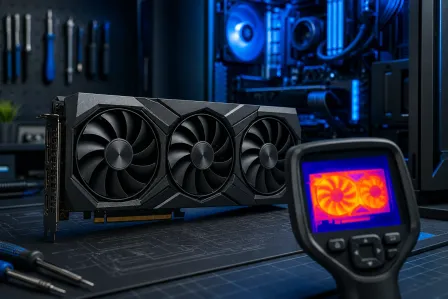
- On desktops, ensure your CPU cooler is mounted properly and temps are under control to prevent throttling.
If you want this tuned and validated without losing a weekend to testing, our remote support for gaming PC optimization is clutch for software-side fixes, driver cleanup, and settings validation.
BIOS Update Stability: The “Free Upgrade” People Skip
I get it. BIOS updates feel scary. But modern platforms (especially with newer CPUs and DDR4/DDR5 memory) can see real stability and compatibility improvements with BIOS updates. That can directly impact XMP/EXPO training and reduce stutter caused by memory weirdness.
BIOS update best practices (do it safely)
- Read your motherboard/laptop vendor’s instructions carefully.
- Use a stable power source (avoid updating during storms, and don’t do it on a dying UPS).
- After updating, load optimized defaults, then re-enable XMP/EXPO and test.
GPU Driver Clean Install: When “Update” Isn’t Enough
GPU drivers are the heartbeat of your frame pacing. Sometimes a normal update leaves behind profiles or conflicts that cause stutter. A GPU driver clean install can reset the playing field.
Clean install checklist (safe and practical)
- Download the latest driver directly from NVIDIA, AMD, or your laptop OEM (for some laptops, OEM drivers can be more stable).
- Use the installer’s clean install option if available.
- After install, reboot and re-test the same frametime run.
Also check your in-game frame cap strategy. A stable cap (like 141 on a 144 Hz display) can reduce spikes and keep VRR in the sweet spot. This is where the magic happens: consistent pacing beats raw peak FPS for competitive aim.
Palm Beach County Gaming PC Repair: When to Stop Tweaking and Get It Professionally Validated
If you’ve done the measurements, disabled overlays, tested polling rates, validated XMP stability, cleaned drivers, and you still get microstutter, it’s time for deeper validation. Sometimes it’s thermal throttling, failing storage, a flaky USB controller, a marginal PSU, or a driver/device conflict that needs isolation with known-good parts and repeatable tests.
At Fix My PC Store in West Palm Beach, we help gamers across Palm Beach County chase down stutter like it owes us money. We can:
- Validate stability (CPU, GPU, RAM) and confirm XMP/EXPO reliability
- Identify DPC latency and device-driver conflicts
- Optimize Windows settings for consistent frametimes and strong 1% lows
- Recommend upgrades only when they actually move the needle (no budget-shaming, ever)
Ready to Upgrade Your Gaming Rig?
Get expert gaming PC builds, upgrades, and repairs from Palm Beach County's performance specialists.
Level Up Now