Deepfake Voice Fraud in 2026: How SMBs Can Verify Callers
Listen to this article
TL;DR: AI voice cloning tools have made it genuinely easy for criminals to fake a phone call from your boss, your bank, or your IT guy. In 2026, small businesses are getting hit hard because they don't have the verification layers that big corporations do. This post explains how the scam works, what it sounds like, and what your team should do every single time a caller asks for money, access, or information.
The Phone Call That Sounds Exactly Like Your CEO
Look, I've been fixing computers since the days when a modem sounded like two robots arguing. I've seen a lot of threats come and go. But deepfake voice fraud? This one actually keeps me up at night, and I'm not the type who loses sleep over technology.
Here's the situation in 2026. An employee at a small business in Palm Beach County gets a call. It sounds exactly like the owner. Same cadence, same speech patterns, same way he says "Listen, I need you to handle something for me." The voice tells her to wire $18,000 to a new vendor account right away because the deal closes today and he's stuck in a meeting. She does it. The money is gone in four minutes.
That's not a hypothetical. Variations of that scenario are happening to small and mid-sized businesses every week. And the technology making it possible costs almost nothing to use.
Our cybersecurity services for Palm Beach County businesses exist precisely because threats like this don't care how small your company is. Actually, small businesses are the preferred target. More on that in a second.
How AI Voice Cloning Scams Actually Work
I'm not going to pretend this is complicated. It isn't, and that's the problem.
A criminal finds audio of your voice. Could be a YouTube video, a podcast, a voicemail greeting, a Teams recording that got shared somewhere it shouldn't have. Doesn't need to be much. Thirty seconds to a couple of minutes is plenty for a modern AI voice cloning tool to build a working model of how you sound.
From there, the attacker types what they want you to say, and the tool generates audio that sounds like you said it. They call your employee, play the audio or use a real-time voice conversion tool to speak live through your cloned voice, and ask for something valuable. A wire transfer. Login credentials. Remote access to a system. A password reset override.
The Malwarebytes breakdown of voice cloning scams does a solid job explaining the technical side if you want to go deeper. The short version: the barrier to entry for this attack is embarrassingly low, and the payout potential is high.
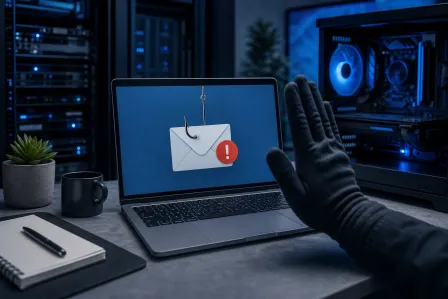
This is a vishing attack (voice phishing) with an AI upgrade. Old-school vishing was just a scammer pretending to be someone on the phone. Human voice, human limitations. Now the voice can be cloned, it can be scaled, and it can be surprisingly convincing even to people who know the person well.
Why Small Businesses Are the Easier Target
Big corporations have legal departments, multi-step wire approval processes, and security teams whose entire job is watching for this stuff. You probably don't have any of that. You have a small staff that trusts each other, a culture of getting things done fast, and a boss who sometimes does actually call and say "handle this now."
Attackers know this. They're not dumb. They pick targets where one phone call can move money without a second set of eyes. That's your business. That's a lot of businesses in Palm Beach County and everywhere else.
Real SMB Attack Scenarios You Should Know
Here are the patterns I see. These aren't exotic. These are the bread and butter of deepfake voice fraud in 2026.
The Fake Executive Wire Transfer
Someone clones the owner's or CEO's voice and calls accounting or an office manager. Urgent wire transfer, new vendor, don't tell anyone yet because it's sensitive. Classic setup. The time pressure and secrecy request are the tells, but people miss them when the voice sounds right.
The Fake IT Support Call
A voice that sounds like your IT person or a known vendor calls an employee. There's a security issue, they need remote access right now, can you install this tool or give me the login for the firewall? If your staff doesn't have a verification protocol, this one works more often than it should.
For the record, legitimate IT support doesn't cold-call you demanding emergency access. If someone claiming to be from your IT provider calls out of nowhere asking for credentials, hang up and call the provider directly using a number you already have. Microsoft's guidance on protecting yourself from phishing covers the general mindset well.
The Vendor Impersonation Call
A voice cloned from a vendor rep you work with regularly calls to update banking information for future payments. New account number, please update your records. Next payment goes straight to the attacker. This one is especially nasty because it doesn't trigger immediate alarm bells. It's just an admin update, right?
The Credential Harvest
Cloned voice of a manager or IT staff member calls an employee and asks them to confirm their login for a system migration or security audit. Employee reads off credentials. Done. If those credentials aren't protected by multi-factor authentication, the attacker is in before the call ends.
Caller Verification Protocols That Actually Work
Alright. Here's the part that matters. None of this is magic. It's just process, and process is what small businesses skip because they're busy. Stop skipping it.
The Callback Rule - No Exceptions
Any call requesting money movement, credential sharing, or system access gets a callback. Not to the number that just called you. To the number you already have on file for that person or company. This one rule stops a massive percentage of vishing attacks cold. The attacker can't control the number you call back. If the request was legitimate, the real person will confirm it. If it wasn't, you just saved yourself a bad day.
Train your staff on this until it's automatic. "I need to call you back to verify" is not rude. It is correct.
Verbal Code Words for Internal Calls
Set up a shared code word or phrase that only internal staff know. If someone calls claiming to be the owner or a manager and makes an unusual request, the employee asks for the code word. Doesn't matter how good the voice clone is. The attacker doesn't know the code word.
Change it regularly. Don't put it in an email. Keep it verbal and internal.
Out-of-Band Confirmation for Financial Requests
Any wire transfer, payment change, or vendor banking update needs confirmation through a second channel. Voice call plus a follow-up email from a known address, or a text from a verified number. Not one or the other. Both. If someone is pushing back hard on this requirement, that's a red flag, not a reason to skip the step.
Written Policy for Sensitive Actions
Put it in writing that certain actions - wire transfers above a threshold, credential sharing, remote access grants - require documented approval. When something is policy, employees have cover to say no and ask for verification without feeling like they're being difficult. Give your staff that cover. They need it.
Train Your Team to Recognize the Pressure Tactics
Urgency and secrecy are the two biggest weapons in social engineering. "Do this right now" and "don't tell anyone about this" are not signs of a legitimate business request. They are signs of an attack. Every employee who handles money, credentials, or access requests needs to know this in their bones.
This is part of why we offer employee security awareness training as part of our business IT services. You can have every technical control in the world, and one undertrained employee can still hand the keys to the wrong person over the phone.
What To Do If You Think You've Already Been Hit
First, don't panic and don't try to fix it yourself by clicking around. If credentials were compromised, change passwords immediately and enable multi-factor authentication on everything you can reach. If money moved, call your bank right away - there's sometimes a short window to recall a wire transfer.
Then call someone who knows what they're doing. Document everything you remember about the call while it's fresh. If malware was installed as part of the attack, you need a proper virus removal and system cleaning before that machine touches your network again. Do not just restart it and hope for the best. That's not how this works.
And yes, make sure your business data is backed up properly. If an attacker gets into your systems and encrypts your files, a good backup is the difference between a bad afternoon and a catastrophic loss. If your backups are inconsistent or untested, take a look at our business backup solutions before you need them instead of after.
The Bottom Line on Deepfake Voice Fraud
Back in my day, you could tell a scam call because the audio quality was terrible and the guy had an obvious script. Those days are gone. The voice on the other end of the phone in 2026 can sound exactly like your boss, your banker, or your best vendor, and it might be none of them.
The defense isn't some expensive AI detection tool (though those exist and are getting better). The defense is process. Callback verification. Code words. Two-channel confirmation. Written policy. Trained staff. Boring stuff that works. Same as it ever was.
You don't need a fancy solution. You need a consistent one.
Worried About Your Security?
Get professional virus removal, security audits, and data protection from Palm Beach County's cybersecurity experts.
Secure Your System