CMOS Battery Dead? Signs Your PC Clock Reset Means Bigger Problems
Listen to this article
Quick summary: If your PC clock keeps resetting every time you shut down, your BIOS settings keep reverting to defaults, or you're seeing strange boot errors, there's a very good chance your CMOS battery is dying. The great news? A CMOS battery replacement is one of the simplest and cheapest fixes in all of computer repair. Let's walk through what's happening, what to watch for, and when a dead battery might actually be pointing to something bigger.
What Is a CMOS Battery and Why Does Your PC Need One?
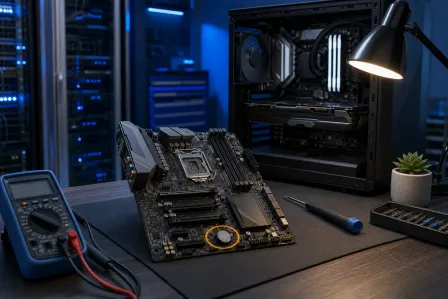
Okay, let's break this down. Every desktop and laptop computer has a tiny coin-cell battery tucked away on the motherboard. It's almost always a CR2032 - you've probably seen these little silver discs in watches or remote controls. This battery powers a small chip called the CMOS (Complementary Metal-Oxide Semiconductor), which stores your computer's most basic settings even when the machine is completely powered off.
Think of it like this: your BIOS (or UEFI on newer systems) needs to remember certain things at all times. What hard drive to boot from. What time it is. How your RAM is configured. The CMOS battery keeps that memory alive when your PC is unplugged or shut down.
Without it? Your computer essentially wakes up with amnesia every single time.
According to Crucial's overview of CMOS batteries, these little cells typically last anywhere from 3 to 10 years depending on usage. So if your PC is getting up there in age, this is absolutely something to have on your radar.
Warning Signs Your CMOS Battery Is Dying
Here's where things get interesting. A dying CMOS battery doesn't just fail all at once. It gives you clues - sometimes for weeks or even months before it fully gives out. Here are the motherboard battery failure symptoms you should watch for:
1. Your PC Clock Keeps Resetting
This is usually the very first sign. You boot up your computer and the date and time are completely wrong - maybe it's showing January 1, 2009, or some other random date from the past. You fix it, shut down, and the next time you turn on your PC... it's wrong again.
If your PC clock keeps resetting, don't just brush it off. It's not a Windows glitch. It's your CMOS battery telling you it can't hold a charge anymore. You can check Microsoft's guide to setting your time and time zone to rule out software issues first, but if the clock resets after every shutdown, the battery is almost certainly the cause.
2. BIOS Settings Keep Reverting to Defaults
Have you ever changed your boot order, adjusted fan speeds, or enabled XMP for your RAM - only to find those settings have vanished the next time you start your PC? That's a classic CMOS battery failure symptom. Without power to maintain the CMOS memory, your BIOS resets to factory defaults every time.
3. Boot Device Errors
This one really throws people off. You might see messages like "No boot device found" or "Reboot and select proper boot device." Your hard drive is fine! The problem is that your BIOS forgot which drive to boot from because the CMOS lost its settings. This is one of the most common reasons a computer won't boot due to CMOS failure.
4. CMOS Checksum Errors
If you see a message like "CMOS Checksum Error - Defaults Loaded" during startup, that's about as direct as your computer gets. It's literally telling you the stored BIOS data is corrupted or lost. This almost always points to a dead or dying CMOS battery.
5. Your Computer Won't Boot at All
In some cases - especially with older systems - a completely dead CMOS battery can prevent the computer from booting entirely. The system might power on, fans spinning, but never actually reach the operating system. If you're dealing with a PC that won't start and you've ruled out other hardware issues, the CMOS battery is worth checking. Our computer repair team sees this more often than you'd think!
How to Replace a CMOS Battery on a Desktop PC
Here's the good news - you can absolutely do this yourself on most desktop computers. It's one of the easiest hardware repairs out there. You've got this!
What You'll Need
- A new CR2032 battery (available at pretty much any drugstore, electronics store, or online for about $3-$5)
- A Phillips-head screwdriver to open your case
- A few minutes of your time
Step-by-Step CMOS Battery Replacement
- Shut down your PC completely and unplug it from the wall. Press the power button once to discharge any remaining electricity.
- Open the side panel of your desktop case. Most modern cases have thumbscrews - no tools needed.
- Locate the CMOS battery on your motherboard. It's a shiny, silver coin-cell battery about the size of a nickel. It's usually pretty easy to spot.
- Note the orientation of the battery. The positive (+) side almost always faces up.
- Gently release the retaining clip holding the battery in place. It should pop right out. Be careful not to use excessive force on the clip - motherboard components are delicate.
- Insert the new CR2032 battery in the same orientation. You should hear or feel a satisfying little click when it seats properly.
- Close your case, plug everything back in, and power on.
- Enter your BIOS (usually by pressing DEL, F2, or F12 during startup) and reconfigure your settings - especially the date, time, and boot order.
That's it! Seriously. Once you see how simple it is, it'll totally click. Pat yourself on the back - you just did a motherboard-level repair!
CMOS Battery Replacement on Laptops - A Different Story
Now, laptops are a bit trickier. The CMOS battery in a laptop is usually buried deeper inside the machine, sometimes tucked under the motherboard itself or connected via a small wire harness rather than sitting in a clip. Some modern ultrabooks make it extremely difficult to access without specialized tools.
If you're comfortable opening up your laptop and have done it before, you can likely handle this. But if the idea of disassembling your laptop makes you nervous, that's completely valid. There's no shame in getting professional help - it's actually the smart move to avoid accidentally damaging ribbon cables or other components.
Our laptop repair specialists in West Palm Beach handle CMOS battery replacements regularly and can have your laptop back to you quickly.
When a Dead CMOS Battery Signals a Bigger Motherboard Problem
Okay, here's the part most guides skip - and it's really important. Sometimes a dead CMOS battery isn't the whole story. If you replace the battery and you're still experiencing the same symptoms, something deeper might be going on.
Signs the Problem Goes Beyond the Battery
- Brand new battery drains within days or weeks. If a fresh CR2032 dies unusually fast, there could be a short circuit or a failing component on the motherboard that's drawing too much current.
- BIOS settings still won't save. This could indicate corrupted BIOS firmware or a failing CMOS chip itself.
- Random shutdowns or instability persist. If boot problems continue even with a new battery and correct BIOS settings, the motherboard may have other issues - failing capacitors, damaged traces, or power delivery problems.
- The battery holder is damaged. A corroded or broken battery clip won't maintain proper contact, making even a brand-new battery useless.
These situations require proper motherboard-level diagnostics. If you're in Palm Beach County and running into these kinds of persistent issues, our desktop computer repair team in Palm Beach can run comprehensive diagnostics to pinpoint exactly what's going on. We'd rather find the real problem than have you keep swapping batteries!
Protecting Your Data When CMOS Issues Strike
Here's something people don't always think about: when your BIOS settings keep resetting and your PC can't find the boot drive, it can feel like your data is gone. It's not! Your files are almost certainly still safe on the hard drive or SSD. The computer just temporarily forgot how to access them.
That said, any time your PC is acting unpredictably is a great time to make sure your important files are backed up. If you're worried about data loss from ongoing boot issues, our data recovery service can help you secure your files before things escalate.
How Often Should You Replace Your CMOS Battery?
There's no need to replace it on a strict schedule. But here are some good rules of thumb:
- If your PC is 5+ years old and you've never replaced the CMOS battery, it's worth doing proactively - especially if you're already inside the case for another upgrade.
- If your PC sits unplugged for long periods, the battery drains faster. Computers that stay plugged in (even when off) put less strain on the CMOS battery because the power supply provides a trickle of standby power.
- Keep a spare CR2032 on hand. They're so cheap and small, there's no reason not to have one in your desk drawer.
Think of it like changing the battery in a smoke detector. It's a tiny thing that prevents a lot of headaches down the road.
Don't Ignore the Signs - Your PC Is Trying to Tell You Something
A resetting clock might seem like a minor annoyance, but it's your computer's way of waving a little flag that says, "Hey, something needs attention!" The fix is usually quick, cheap, and satisfying. And if it turns out to be something more than just the battery, catching it early means less downtime and fewer surprises.
Whether you're a DIY enthusiast ready to pop in a new CR2032 or you'd rather have a professional handle it, the important thing is not to ignore the symptoms. You've got this - and we've got your back if you need us!
Need Expert Computer Support?
From CMOS battery replacements to full motherboard diagnostics, Fix My PC Store in West Palm Beach has Palm Beach County covered. Stop guessing and get answers today.
Get Help Today