PC Repair Near Me: Questions to Ask Before You Commit
TL;DR: When you search for PC repair near you, the first result is not always the best choice. Ask about diagnostics fees, data protection, and turnaround time before you commit. A shop that can't answer these questions clearly is a shop worth skipping.
Before choosing a repair shop, ask how it protects your data, explains diagnostic fees, and gets your approval for work. Clear answers help you compare shops without relying only on a search ranking.
You deserve better than that. So before you walk into any shop, or ship your machine off to some national mail-in service, run through this list. These questions help you compare service terms and protect your files.
1. Do You Charge for Diagnostics, and Is It Applied Toward the Repair?
This is the first thing to ask when you're searching for PC repair near me and calling around to shops. Some places charge a flat diagnostics fee no matter what. Fine. But you need to know upfront whether that fee gets credited toward the repair cost if you say yes.
A diagnostic fee may cover work separate from the repair. Ask whether the fee is credited toward approved work, what it covers, and whether any additional fee requires your approval. Compare the total estimate, not just the diagnostic line.
2. How Do You Handle My Data During the Repair?
This one matters more than most people realize. You are handing a stranger a machine that probably contains your bank logins, your photos, your work files, and your passwords saved in a browser. That is a lot of trust.
Ask whether the shop may need access to your files or login to test the repair, who can access the device, and what happens if data is lost. Back up first when possible. If they shrug and say "we'll be careful," that's not a policy.
If you haven't backed up recently, do it before you drop anything off anywhere. Seriously. Storage can fail unexpectedly, so discuss backup or recovery before authorizing work on a device with irreplaceable files. If you need help setting that up, we have a backups and disaster recovery service for exactly this kind of situation.
3. What Is Your Estimated Turnaround Time?
Some shops will tell you "a few days" and mean two weeks. Get a specific answer. Not a promise, but a real estimate with a range.
Ask for an estimate based on the diagnosis, part availability, and current workload. A screen repair requiring a part can take longer than a software fix. If a shop says "we're backed up, could be a week or two," that is useful information. You can decide whether to wait or find someone else.
What you want to avoid is a shop that takes your machine and goes quiet. If they can't tell you a reasonable window upfront, ask how they communicate with customers during the repair. Do they call? Text? Email? Do they have an online ticket system?
No communication process at all is a red flag.
4. Are You Certified, and Do You Work on My Type of Machine?
Certifications aren't everything, but they're something. Training and certifications can help, but experience with your specific device and a clear repair process matter too. Ask what training and model-specific experience the technician has.
Also ask whether they actually work on your type of machine. A shop that mostly does Windows PC repair might take your MacBook, muddle through it, and charge you for the learning curve. Our Mac repair service exists because Mac hardware has quirks that require actual experience, not guesswork.
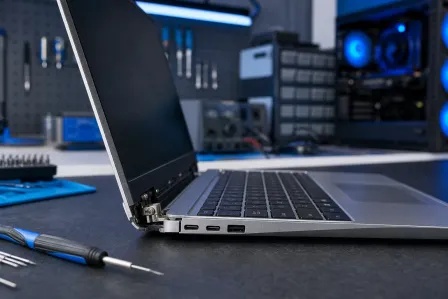
If you've got a laptop with a cracked screen or a failing keyboard, ask if they specialize in laptop repair specifically. Not every shop stocks parts for every brand, and some will order them, sit on your machine for a week, and then tell you the part is delayed.
Computer acting up? Get a real diagnosis. Book a diagnostic
5. Do You Offer a Warranty on Your Work?
Any shop worth using stands behind the repair. Ask for the written warranty period and exactly which parts, labor, and recurring symptoms it covers.
If a shop fixes your machine, you take it home, and it has the same problem three days later, you should be able to bring it back without paying again. Without written warranty terms, it is harder to know what a return visit will cost.
Ask specifically: "If this same issue comes back within 30 days, what happens?" A confident shop will tell you without hesitation. A less confident shop will start adding conditions.
Also ask what happens if they cause a new problem during the repair. Accidents happen. The question is whether they own them or bill you for them.
6. Will You Give Me a Written Estimate Before You Start Work?
Request a written estimate and approval terms before repair work begins. Some problems require diagnosis first; ask how the shop will seek approval if the scope or price changes.
If additional problems are found, ask for an explanation, a separate price, and time to approve or decline the work.
If a shop calls you mid-repair with a significant upsell, ask whether work can pause while you review the estimate and what charges already apply.
7. Can You Handle This Remotely, or Do I Even Need to Come In?
A lot of people don't know this, but a surprising number of computer problems don't require dropping off your machine at all. Software issues, virus removal, performance tuning, settings problems, account lockouts. Many of these can be handled through a secure remote support session where a tech connects to your machine with your permission and fixes the problem while you watch.
Remote support may save a trip for suitable software issues; confirm the scope and price first. If you're calling around for PC repair near you and the problem sounds like it might be software-based, ask whether remote support is an option. Availability varies by shop and by the problem.
8. Do You Also Work With Small Businesses?
This matters even if you're a home user, because it tells you something about the shop's depth. A place that only does one-off residential repairs is fine for basic stuff. If you need business IT support or cybersecurity, ask for relevant experience, data-handling practices, and service scope.
For business owners in West Palm Beach and across Palm Beach and the Treasure Coast, this question is especially important. You're not just handing over a personal machine. You're handing over something that runs your business. The shop you pick should understand that pressure and handle your equipment accordingly.
And if you're a business looking at something longer-term than a one-time fix, ask whether they offer managed IT services. That's a different conversation, but it's worth having.
Bottom Line
Searching "PC repair near me" gives you a map and a list of star ratings. That's a starting point, not a decision. Star ratings get gamed. Shiny websites don't mean skilled techs.
The questions above take about five minutes on the phone. Any shop that gets annoyed by them, dodges them, or gives you vague non-answers is telling you something important. Listen to it.
If you're in West Palm Beach or anywhere across South Florida and want to talk through what your machine needs before you commit to anything, you can reach us here or check out what a full computer repair visit actually looks like at a shop that answers its own questions straight.
Contact the shop to discuss the problem, diagnostic terms, and repair options before leaving your device.
Computer acting up? Get a real diagnosis.
Fix My PC Store has repaired thousands of machines across West Palm Beach. Initial checks are free for most standard in-store repairs; ask about any advanced diagnostic fee before work begins.